
A wallet is one of the few things most of us carry every single day. It holds our money, our cards, and our ID, yet most people buy a new one without much thought. The shape, the fold, the number of slots, and the type of leather all change how a wallet feels in your pocket and how long it lasts. This guide explains the main types in plain language, so you can pick one that fits your life.
Why the Type of Wallet Matters
A wallet shapes how you carry your essentials and how often you reach for them. A bulky wallet in slim trousers feels uncomfortable all day and wears out the pocket, while a wallet that is too small forces you to leave cards at home. Before you shop, think about your normal day. Do you carry six cards or sixteen, do you still use cash, and do you wear jeans, suit trousers, or a jacket? The answers point you toward a different wallet type.
The Bifold Wallet
The bifold is the classic wallet, and the most common type in shops. It folds in half, with card slots on one side and a note compartment behind them, and most bifolds hold six to twelve cards plus folded banknotes. It opens flat so you can see your cards. The weakness is that a bifold tempts you to fill every slot, and once packed, it becomes thick and the leather stretches. Look for a full length note compartment and strong stitching around the fold.
The Trifold Wallet
A trifold folds into three sections instead of two. When closed, it is shorter and thicker than a bifold, and when open, it gives you more card slots plus room for coins or an ID window. Trifolds suit people who carry a lot: if you have ten or more cards, plus a driving licence and a work pass, a trifold keeps everything in one place. The trade off is bulk, because a full trifold can feel like a small brick in a back pocket and can be uncomfortable to sit on, so many people carry one in a bag or a jacket pocket instead. Choose one if organisation matters more than slimness, and add a coin pouch only if you use coins.
The Card Holder Wallet
A card holder is the simplest wallet of all. It is a flat sleeve, usually with two to six card slots and sometimes a small pocket for folded notes, with no fold, no coin pouch, and nothing extra. If you carry three or four cards and rarely use cash, a card holder is hard to beat. It slips into a front pocket, it is light, and it forces you to carry only what you need. The limit is obvious: a card holder is not right if you carry lots of cash, many cards, or coins.
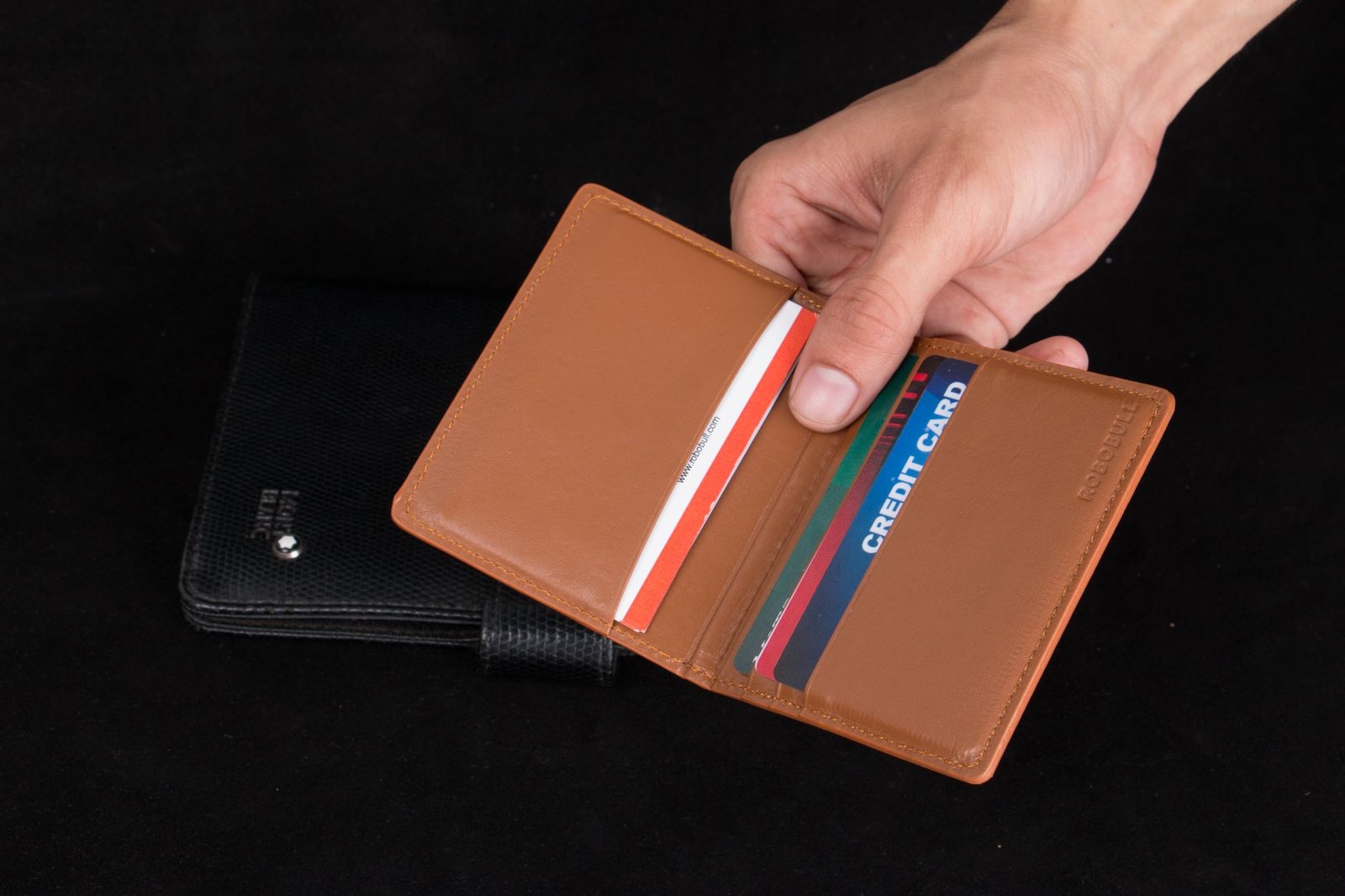
The Money Clip Wallet
A money clip wallet combines a small card holder with a metal clip, or sometimes a leather strap, that holds folded banknotes on the outside. Some versions use a strong magnet instead of a metal clip. Your cards sit inside, and your cash stays clipped and visible on the back. This style suits people who carry cash but hate bulk, because it is slimmer than a bifold and quicker than a zip wallet: you can pull out a note without opening anything. The clip must be strong, because a weak clip lets notes slip out when you sit down. Second, a money clip holds only a small number of notes neatly, so it is best for everyday amounts rather than a thick stack of cash.
The Long Wallet
A long wallet, sometimes called a continental wallet, is tall and wide. It holds banknotes flat without folding them, and it usually has many card slots, a zip coin section, and space for a phone or a chequebook. Long wallets are popular with people who carry their wallet in a bag rather than a pocket, and with travellers, because they can hold a passport, boarding passes, and several currencies at once. The downside is size. A long wallet does not fit comfortably in most trouser pockets, and it can look out of place with casual clothes. If you want a pocket wallet, choose a bifold or a card holder instead.
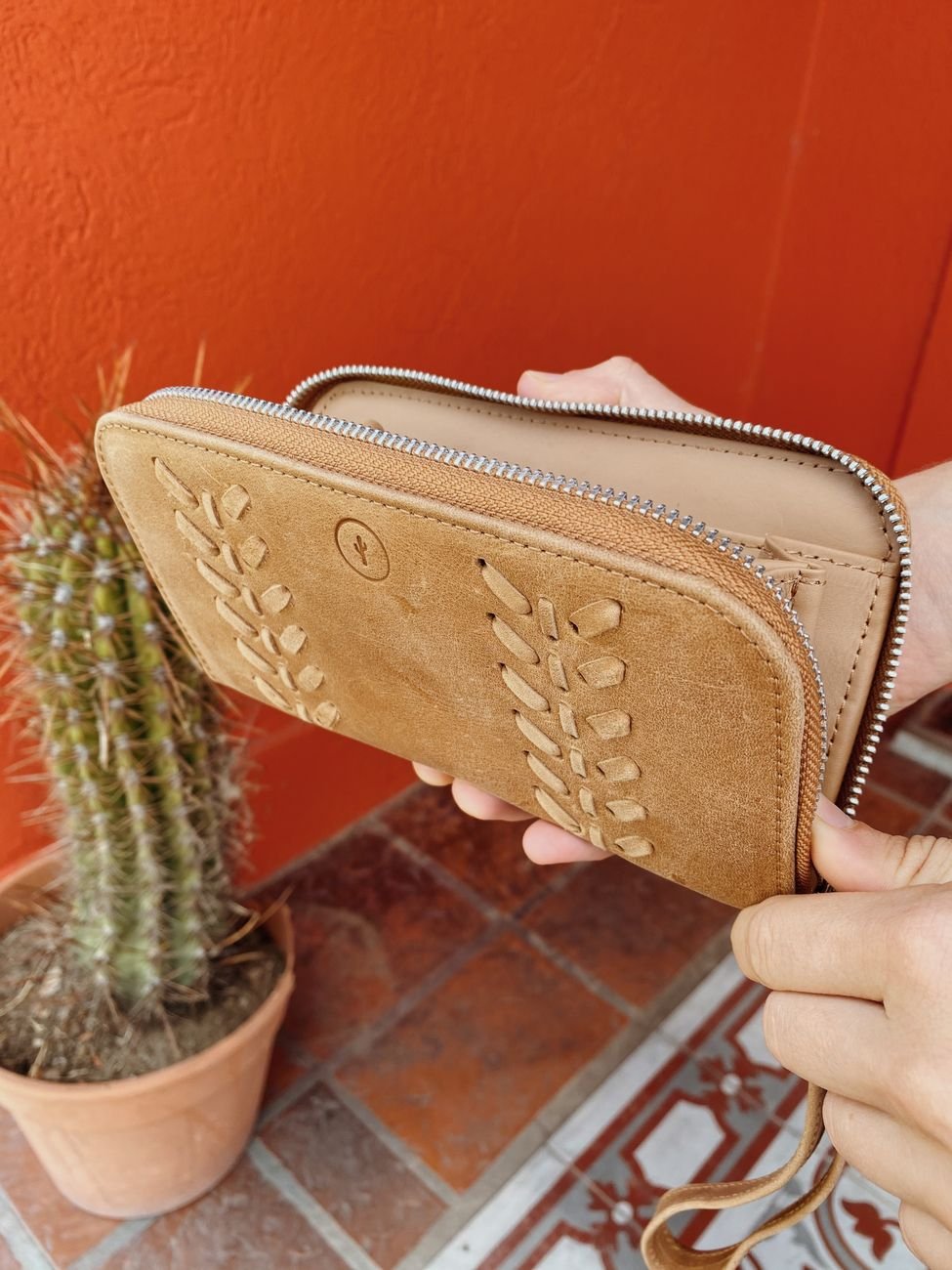
The Zip Wallet
A zip wallet closes with a zip around two or three sides. Inside, you usually find card slots, a note compartment, and a coin section, and because the zip keeps everything sealed, nothing falls out, even if the wallet is turned upside down in a bag. This is a good choice if you carry coins or small items, or if you want extra security. The cost is thickness and speed: it is bulkier than a bifold, and you must unzip it for every card. The zip itself is also a weak point, so test it several times when you shop and choose a smooth, sturdy one.
Slim and Minimalist Wallets
Slim wallets sit between a card holder and a bifold. They usually hold four to eight cards and a few folded notes, with no coin pouch and no extra flaps, and many are made from a single piece of leather folded around the cards. These wallets are ideal if you want to carry less and you like a clean front pocket. They work well with slim jeans and tailored trousers, where a thick wallet would show through the fabric. The limit is capacity. A slim wallet will not hold a dozen cards, and it will not hold coins, so if you force too much into it, the leather stretches and the cards become loose.
Comparison Table: Wallet Types at a Glance
| Wallet type | Cards held | Cash | Coins | Best for |
|---|---|---|---|---|
| Bifold | 6 to 12 | Folded notes | Rarely | Everyday use |
| Trifold | 10 to 16 | Folded notes | Often | Many cards |
| Card holder | 2 to 6 | Few notes | No | Front pockets |
| Money clip | 4 to 8 | Clipped notes | No | Slim cash carry |
| Long wallet | 12 or more | Flat notes | Often | Bags and travel |
| Zip wallet | 6 to 12 | Folded notes | Yes | Security |
| Slim wallet | 4 to 8 | Few notes | No | Light carry |
What Leather Should Your Wallet Be Made From?
The leather grade matters as much as the shape. Full grain leather is the top layer of the hide with its natural surface left alone. It is the strongest grade, and it develops a rich patina as it ages. Top grain leather has had the very top surface lightly sanded, which makes it smoother and more uniform but slightly less durable. Genuine leather is a lower grade, and bonded leather is made from scraps glued together, so it is the weakest option and prone to peeling. For a wallet you plan to keep for years, full grain or top grain leather is the best choice. You can learn more from the Leather Working Group, which sets standards for responsible leather production, and from Tandy Leather’s leather guide. The Horween Leather Company also publishes useful background on traditional tanning.
How to Choose the Right Wallet for You
Start with what you carry, not what looks good in a photo. Empty your current wallet onto a table and sort it into three piles: things you use every week, things you use every month, and things you have not used in months. The first pile tells you the size you need, the second pile can stay at home, and the third pile can probably be thrown away. Next, think about where the wallet will live. A back pocket suits a bifold or a trifold, a front pocket suits a card holder or a slim wallet, and a bag suits a long wallet or a zip wallet. Then check the details: stitching should be even and tight, and card slots should hold a card firmly.

How to Care for a Leather Wallet
A leather wallet needs very little care, but a little attention goes a long way. Keep it away from water as much as you can, and if it gets wet, let it dry naturally at room temperature instead of using a heater. Do not overfill it, because stretched leather does not shrink back. Clean it with a soft, dry cloth every few weeks, and if it gets dirty, use a slightly damp cloth and a little leather cleaner, then let it dry. Once or twice a year, apply a thin layer of leather conditioner to keep it soft.
Final Thoughts
There is no single best type of leather wallet. There is only the best type for your cards, your cash, your clothes, and your habits. A bifold is the safest all round choice, a card holder is best if you carry little and want to travel light, and a trifold or a long wallet is best if you carry a lot. A money clip or a zip wallet solves a specific problem, and a slim wallet is perfect for a front pocket. Before you buy, count your cards, check where the wallet will live, and choose full grain or top grain leather if you can. For brand background, see our guides to Louis Vuitton, Bellroy, Goyard, and Fossil.
Frequently Asked Questions
What is the most popular type of leather wallet?
The bifold is the most popular type. It holds a useful number of cards and folded notes, and it suits both casual and formal clothes.
How many cards should a wallet hold?
Most people need six to ten slots, covering a bank card, a credit card, an ID, and a driving licence.
Is a trifold wallet too bulky?
A trifold is thicker than a bifold, and it can feel bulky in a back pocket. It works best in a jacket pocket or a bag.
Are card holder wallets practical?
Yes, if you carry only a few cards and little cash. A card holder is light and slim, but it is not practical if you carry many cards or coins.
What is the best leather for a wallet?
Full grain leather is the best choice for durability and ageing. Top grain leather is a close second. Avoid bonded leather.
How long should a leather wallet last?
A good leather wallet should last five to ten years with normal use, and a full grain wallet can last even longer.
Should I keep my wallet in my back pocket?
You can, but a front pocket is kinder, and sitting on a thick wallet can cause back discomfort.
Do leather wallets stretch over time?
Yes, leather stretches a little with use, especially if the wallet is overfilled. Card slots that start snug will loosen slightly, which is normal.
What is a minimalist wallet?
A minimalist wallet is a small, slim wallet that holds only the essentials, usually four to eight cards and a few notes.
How do I clean a leather wallet?
Wipe it with a soft, dry cloth first. For dirt, use a slightly damp cloth and a little leather cleaner, then let it dry naturally.
Is a zip wallet safer than a bifold?
A zip wallet is safer in that nothing can fall out, because the zip seals it shut.
What size wallet fits a front pocket?
A card holder, a slim wallet, or a money clip wallet fits a front pocket best. They are flat and light, with no obvious bulge.
#leatherwallets #bifoldwallet #trifoldwallet #cardholderwallet #leatheraccessories #walletbuyingguide