
Learning how to remove water stains from leather can save a favourite jacket, bag or pair of shoes from looking ruined. A water stain usually looks worse than it is. It is often a dark ring or a pale patch where water dried unevenly, and in most cases you can fix it at home with patience and a gentle touch. You do not need harsh chemicals, and you should not reach for them first.
In this guide I will show you why leather marks so easily, what to do in the first few minutes after it gets wet, and the step by step method that works for most smooth leather. I will also cover suede, because it needs a different approach, and the mistakes that turn a small mark into a permanent one.
Why Water Leaves Marks on Leather
Leather is skin, and it is porous. When water sits on one spot, it soaks into the fibres and moves the natural oils and dyes in that area. As the spot dries, the water carries those oils and colour particles toward the edge of the damp patch. That edge dries last, so it leaves a visible ring. The centre may look darker while it is wet and lighter once it is dry.
Some types of leather mark more easily than others. Vegetable tanned leather, aniline leather and unfinished leather absorb water quickly and show every drop. Finished leather with a protective top coat resists water better, but it can still stain if water sits on it for a long time. Suede and nubuck are the most sensitive of all, because water flattens the fine nap. You can read more about how leather is made and tanned on Wikipedia: Leather and Wikipedia: Tanning (leather).
What to Do Right Away When Leather Gets Wet
Speed helps, but rubbing does not. As soon as you notice water on leather, blot it gently with a clean, dry, soft cloth. Press the cloth on the spot and lift it. Do not rub in circles, because rubbing can push water deeper and spread the stain. Change to a dry part of the cloth and blot again until no more moisture transfers.
Let the item dry naturally at room temperature, away from direct sunlight and away from radiators, hair dryers and heaters. Heat dries the surface too fast, and that can cause cracking and a new ring. Stuff a wet bag or shoe with plain white paper to help it hold its shape while it dries. Do not use newspaper, because the ink can transfer.
How to Remove Water Stains from Leather
This is the method I use first for smooth, finished leather. It works by wetting the whole panel evenly, so the water dries evenly and no new ring forms. It sounds odd to add water to fix a water stain, but it is the same idea as blending a mark into the rest of the surface. Work on one panel at a time, such as one sleeve, one side of a bag, or one shoe.
- Blot any standing water, then let the leather dry fully at room temperature.
- Dampen a clean, soft white cloth with lukewarm water and wring it out well. It should feel damp, not dripping.
- Wipe the whole panel lightly and evenly, from seam to seam. Do not just dab the stain, because that will leave a new edge.
- Blot away any excess water with a second dry cloth.
- Let the panel dry naturally, away from heat and sunlight, for at least 12 hours.
- Once it is fully dry, apply a small amount of leather conditioner with a soft cloth, then buff off the excess.
- Check the result in daylight. If a faint ring is still there, repeat the process once more.
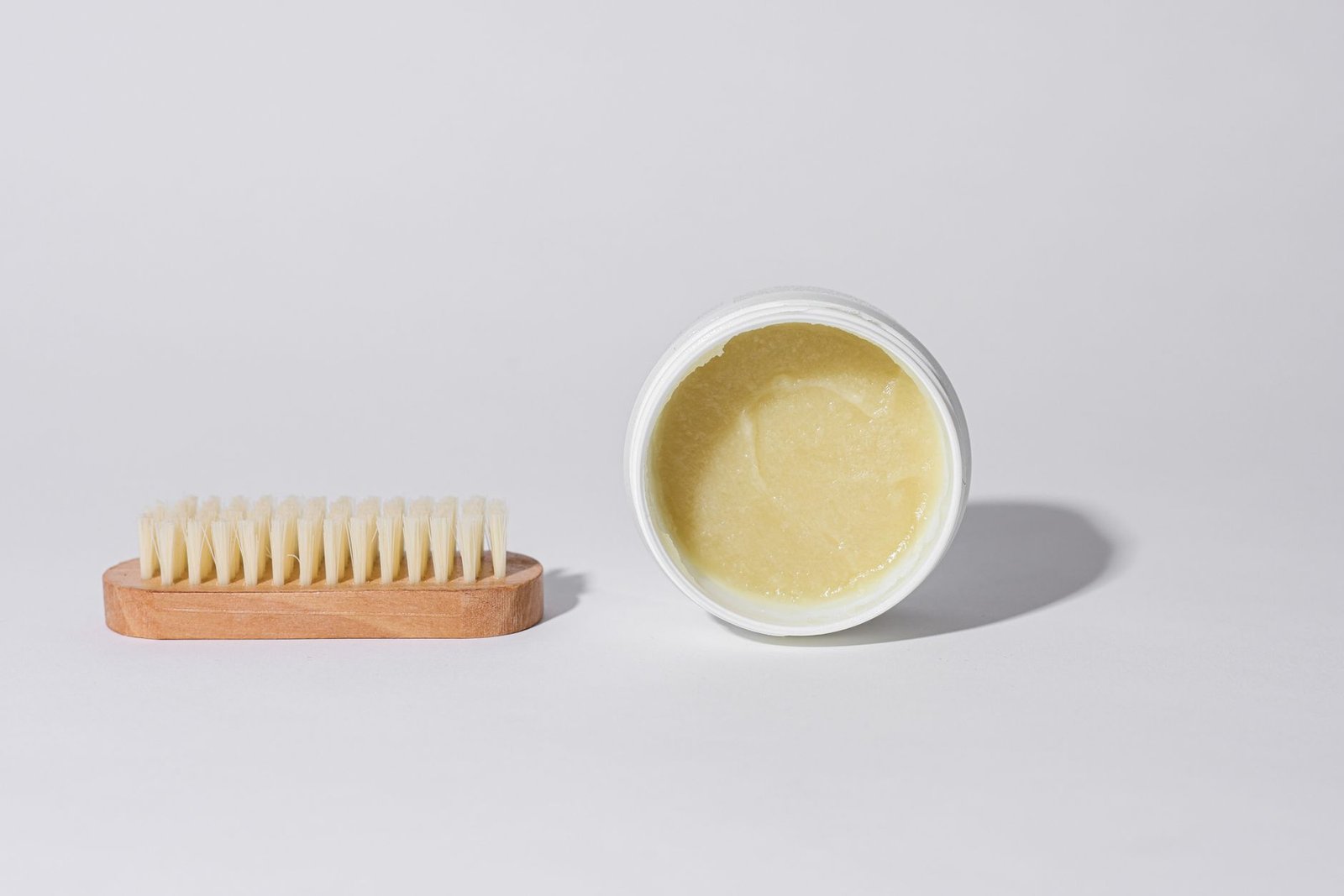
Conditioning is not an optional extra here. Water removes some of the natural oils from leather, and conditioner puts moisture and flexibility back. Without it, the area that got wet can feel stiff and look dull. Use a conditioner made for your type of leather, test it in a hidden spot, and use a small amount.
How to Remove Water Stains from Leather Jackets, Bags and Shoes
The basic method is the same, but each item needs a little care of its own. A jacket has large panels and seams, a bag has hardware and linings, and shoes have stitching and soles that hold moisture.
Leather jackets
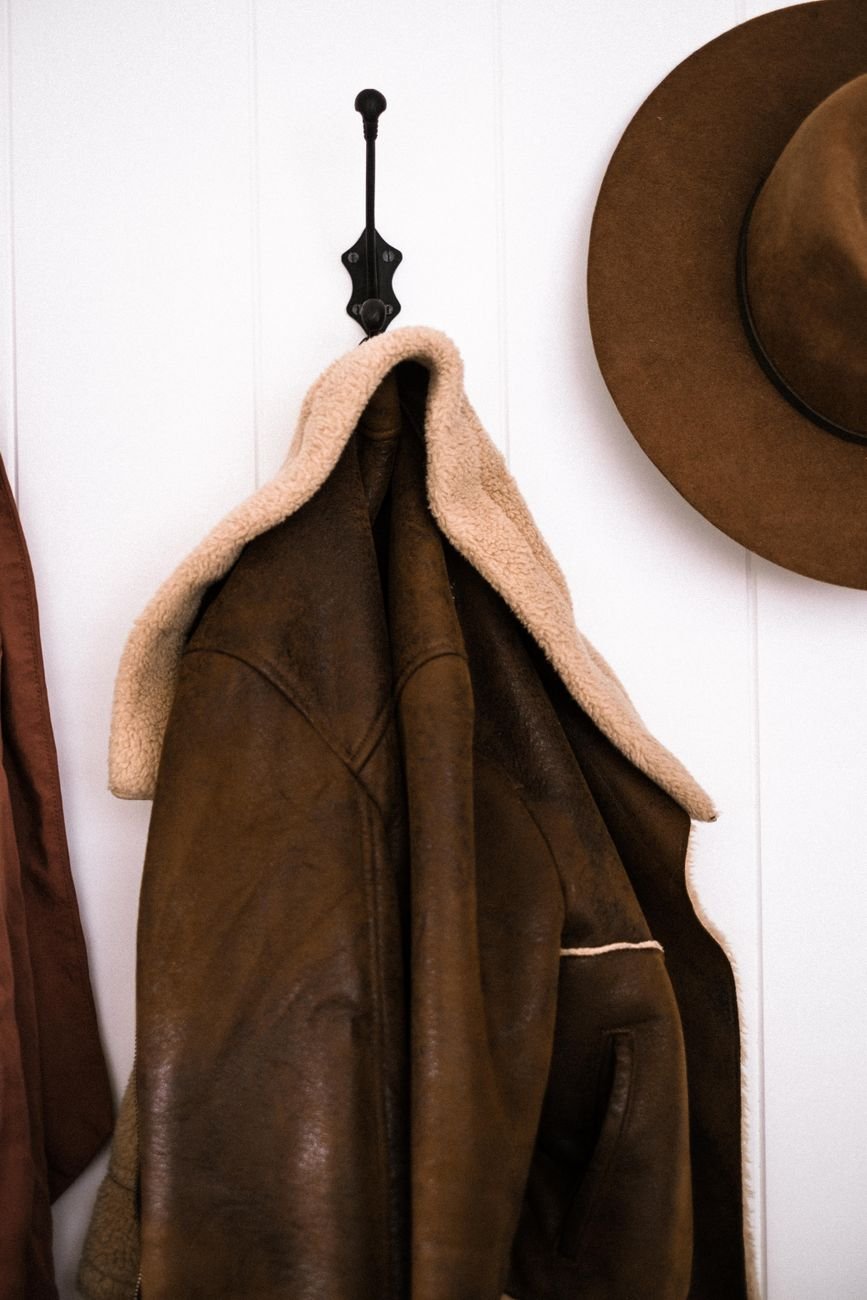
Hang the jacket on a wide, padded hanger and work on one panel at a time. Wipe from seam to seam, and pay attention to the collar and cuffs, because those areas are often drier and may absorb water faster. Let the jacket dry hanging up, with the zip or buttons open so air can move through it. Do not fold a damp jacket. For general jacket care, see our guide on how to clean a leather jacket.
Leather bags
Empty the bag first and remove any paper, pens or cosmetics. Stuff it lightly with white tissue paper so it keeps its shape while it dries. Wipe the stained panel, not the whole bag at once, and avoid getting water on metal clasps, zips and rivets, because those can leave their own dark marks. Dry the bag upright in a well ventilated room.
Leather shoes and boots
Remove the laces and take out the insoles if you can. Stuff the shoes with white paper or shoe trees to hold their shape. Wipe both shoes evenly, even if only one has a stain, so they dry to the same shade. Let them dry at room temperature, away from heaters. Once dry, apply a thin layer of conditioner or shoe cream that matches the colour.
Water Stains on Suede and Nubuck
Suede and nubuck should not be wetted in the same way as smooth leather. Water flattens the nap and can leave a permanent dark patch. Let the suede dry fully first, then brush it gently with a suede brush to lift the nap. For a light mark, a suede eraser can help. Do not use leather conditioner on suede, because it will darken and flatten the nap. Use a suede protector spray instead, once the item is clean and dry.
What Not to Do When Leather Gets Wet
- Do not use a hair dryer, radiator or direct sunlight to dry leather. Heat can crack the surface and set the stain.
- Do not scrub the stain. Scrubbing pushes water deeper and can remove colour.
- Do not use bleach, acetone, nail polish remover or strong household cleaners. They can strip the finish.
- Do not use coloured cloths or towels. Dye can transfer to damp leather.
- Do not apply conditioner to damp leather. Wait until it is fully dry, or the conditioner will trap moisture.
How to Prevent Water Stains on Leather
Prevention is much easier than repair. A good leather protector or water repellent spray, made for your type of leather, adds a light barrier that helps water bead and roll off instead of soaking in. Test the spray in a hidden spot first, apply it in a well ventilated area, and let it dry fully before you wear or use the item. Reapply it every few months, or after you clean the leather. Regular conditioning also helps, because supple leather resists water better than dry leather. If you are not sure how often to condition your items, our guide to how to condition leather step by step explains the routine.
When to Call a Professional
Most water stains can be fixed at home, but take the item to a leather specialist if the stain covers a large area, if the colour has lifted, if the leather feels stiff or cracked, or if the item is expensive, vintage or sentimental. If you have tried the gentle method twice and the ring is still clear, stop and get advice rather than trying stronger products.
Frequently Asked Questions
Can water stains be removed from leather?
Yes, most water stains can be removed from smooth leather. Blot the water, let the leather dry fully, then wipe the whole panel evenly with a damp cloth and condition it once it is dry.
Will water ruin leather permanently?
Water does not usually ruin leather permanently, but it can leave a ring and make the leather stiff if it dries unevenly or near heat. Quick blotting and natural drying will protect most items.
Can I use a hair dryer to dry wet leather?
No, do not use a hair dryer, radiator or direct sunlight on wet leather. Heat dries the surface too fast, sets the stain and can cause cracking. Let leather dry naturally at room temperature.
Does vinegar remove water stains from leather?
A mild mix of one part white vinegar to two parts water can help a stubborn ring on smooth, finished leather. Test it in a hidden spot first, and never use vinegar on suede, nubuck or unfinished leather.
How do I remove water stains from a leather jacket?
Hang the jacket on a wide hanger, work on one panel at a time, and wipe from seam to seam with a damp cloth. Let it dry hanging up, then condition it lightly once it is fully dry.
How do I remove water stains from a leather bag?
Empty the bag, stuff it lightly with white tissue paper, and wipe the stained panel from seam to seam. Avoid the metal hardware, and dry the bag upright in a ventilated room.
How do I remove water stains from leather shoes?
Remove the laces, stuff the shoes with white paper or shoe trees, and wipe both shoes evenly so they dry to the same shade. Dry them at room temperature, then apply a thin layer of conditioner.
How do I remove water stains from suede?
Let suede dry fully, then brush it with a suede brush to lift the nap. A suede eraser can help a light mark. Do not wet suede like smooth leather, and do not use leather conditioner on suede.
Should I condition leather after removing a water stain?
Yes, condition the leather once it is fully dry. Water removes natural oils, and conditioner restores flexibility and colour. Use a small amount and buff off any excess.
How long does leather take to dry after a water stain?
Most leather takes several hours to dry, and a thick item can take overnight. Wait until it feels dry and looks even in daylight before you condition it or judge the stain.
Can I use olive oil or baby oil on a water stain?
No, do not use olive oil, baby oil or household oils on leather. They can darken the leather, leave a greasy patch and attract dirt. Use a conditioner made for leather instead.
#LeatherCare #RemoveWaterStains #WaterStainsOnLeather #LeatherCleaningTips #LeatherJacketCare #LeatherMaintenance