
If you own a leather bag, jacket or pair of shoes, you have probably asked yourself how often should you condition leather. Condition too rarely and the leather dries out, stiffens and eventually cracks. Condition too often and the surface turns sticky, dark and limp. There is no single schedule that fits every item: most smooth leather goods need conditioning every three to six months, but work boots worn every day need it far more often than a handbag that spends most of its life on a shelf. This guide breaks down the right frequency by item type and leather type, the signs that conditioning is due, and the simple routine that keeps leather soft for years.
Why Conditioning Frequency Matters
Leather is skin, and like skin it loses moisture over time. The natural oils that keep a hide supple slowly evaporate, and every time leather gets wet, sits in the sun or rubs against clothing, it loses a little more. A good conditioner replaces those oils and adds a light layer of protection, which is why conditioning matters as much as cleaning. Timing is the difference between leather that ages beautifully and leather that falls apart early: full grain leather on a sensible schedule develops a rich patina and can last for decades, while the same leather left dry for years becomes brittle, and once deep cracks form no conditioner can undo the damage.
How Often Should You Condition Leather
For most people, the short answer to how often should you condition leather is every three to six months for items in regular use, and once or twice a year for items used rarely. Daily use items such as shoes, wallets and car seats sit at the short end of that range, while a handbag or jacket worn a few times a month sits at the long end. New leather needs conditioning sooner than most people expect, and very dry or hot climates shorten every interval by a month or two.
| Item type | How often to condition | Notes |
|---|---|---|
| Leather handbag or tote | Every 4 to 6 months | More often if carried daily in sun or rain |
| Leather jacket | Every 6 months | Once before winter storage and once after |
| Leather shoes and boots | Every 1 to 3 months | Monthly for daily wear work boots |
| Leather sofa or armchair | Every 6 to 12 months | Every 6 months in sunny or heated rooms |
| Car leather seats | Every 3 to 6 months | More often in hot climates or parked outdoors |
| Leather wallet or belt | Every 6 months | Small items dry out faster than people think |
| Leather gloves | Every 3 to 4 months in winter | Only when worn regularly |
Conditioning Frequency by Item Type
Leather Bags
A leather bag should be conditioned every four to six months if you carry it regularly. Bags pick up hand oils, rain, dust and friction from clothing, and the handles and corners dry out first. If you rotate between several bags, condition each one once or twice a year, and always condition a bag before storing it for a season.
Leather Jackets
A leather jacket needs conditioning about every six months, ideally once in autumn and once in spring when you put it away. Jackets face sun, wind and rain, and the shoulders and elbows flex constantly, which is why those areas show dryness first.
Leather Shoes and Boots
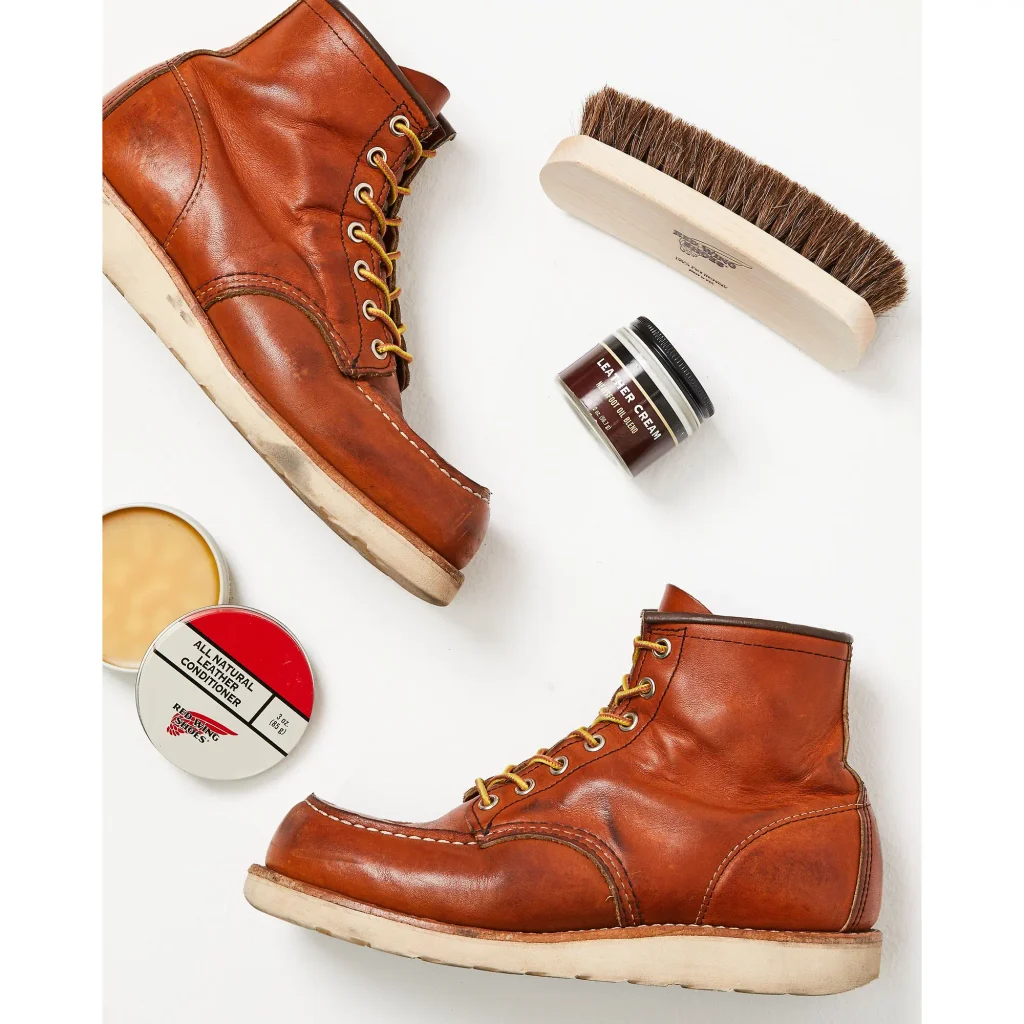
Shoes and boots need conditioning more often than any other leather item, roughly every one to three months. Footwear bends with every step, gets wet and is exposed to salt and grit. Daily wear work boots may need conditioning every month, while dress shoes worn once a week can go three months between treatments. Always clean off dirt and salt first, because conditioner rubbed over grit will grind it into the leather. For more on keeping footwear in shape, see our guide on how to clean leather shoes.
Leather Sofas and Car Seats
A leather sofa should be conditioned every six to twelve months, and car seats every three to six months. Furniture leather is thick and dries slowly, but it also sits in heated rooms or sunlight for hours every day. Car seats have the hardest life of all: heat, sunlight through glass, body sweat and constant friction. If your car is parked outdoors in summer, move car seats to the three month schedule.
Wallets, Belts and Small Goods
Small leather goods are easy to forget, but a wallet lives in a warm pocket, bends every time you sit and is handled dozens of times a day. Condition wallets and belts about every six months, using only a thin coat, because small items absorb conditioner quickly and too much leaves them sticky.
How Leather Type Changes the Schedule
Not all leather behaves the same. The way a hide is tanned decides how it ages, as the Wikipedia overview of leather explains. Full grain leather is the most durable and forgiving: its dense fibre structure holds oils well, so conditioning every four to six months is usually enough. Learn more in what is full grain leather. Top grain leather is slightly thinner and more processed, so it dries a little faster and does best on a three to five month schedule.
Genuine leather and bonded leather are the most fragile. Their surface is heavily finished and thin, so they dry out and peel sooner than full grain. Condition them lightly every three to four months and use only a small amount, because heavy conditioner can lift the finish.
Suede and nubuck are the big exception: never condition them with a standard leather conditioner, which will stain them and flatten the nap. Use a suede protector spray instead and brush the nap regularly. If you are unsure what type of leather you own, test any product on a hidden spot first.
Signs Your Leather Needs Conditioning
Your leather will tell you when it is thirsty. The surface looks dull and flat instead of having a soft, healthy sheen, and it feels dry, papery or slightly rough under your fingers. Fine lines appear at flex points such as the corners of a bag, the elbows of a jacket or the creases of a shoe. The colour looks faded, especially on the parts that catch the sun. In the worst cases the surface starts to crack, and at that point conditioning can slow further damage but cannot repair what is already split.
The simplest check is the touch test. Press your fingertip gently into the leather: healthy, conditioned leather feels supple and springs back, while dry leather feels stiff. Another easy check is a single drop of water on a hidden area. On conditioned leather the drop beads for a while; on dry leather it soaks in almost immediately. If either test says dry, it is time to condition.
Can You Over-Condition Leather?
Yes, and it is one of the most common leather care mistakes. When conditioner is applied too often or too thickly, the leather cannot absorb the excess, so it sits on the surface as a sticky film that attracts dust. Over time the fibres become oversaturated and lose their structure, so a firm bag turns soft and floppy and a structured shoe loses its shape. Light coloured leather can darken permanently, and stitching can weaken when it stays damp with oil.
The fix is simple: use a thin coat, let it absorb for a few hours, then buff off any residue with a clean dry cloth. If the surface still feels tacky after buffing, you used too much. Most items need only one thin coat per session, and if your leather feels greasy after conditioning, skip the next scheduled session entirely.
A Simple Conditioning Routine
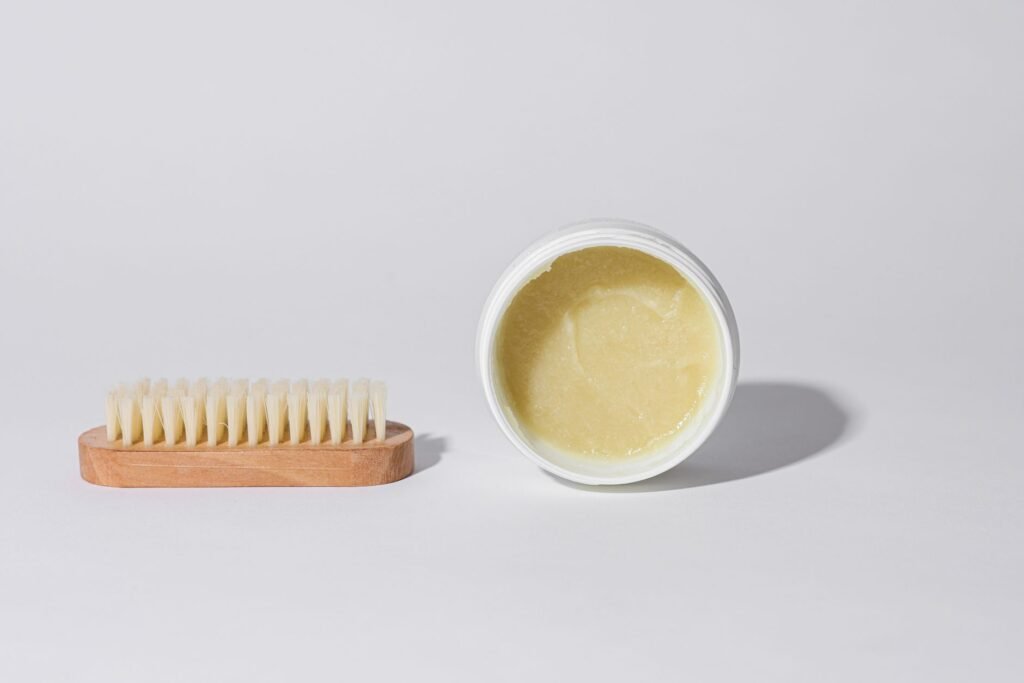
Conditioning leather is a short job once you have the routine down, and the whole process takes about fifteen minutes plus drying time. Start by cleaning the item with a soft brush or dry cloth, then wipe it with a slightly damp cloth and let it dry completely. Never condition dirty or wet leather. Put a small amount of conditioner on a soft lint free cloth, not directly on the leather, and rub it in with slow circular motions, working in small sections. If you buy from a leathercraft supplier such as Tandy Leather, staff can usually recommend a conditioner for your exact leather type. Pay extra attention to flex points and edges, which dry first. Let the conditioner absorb for at least two to four hours, or overnight for a sofa or car seats, then buff gently with a clean dry cloth. For the full step by step version, see how to condition leather step by step.
Seasonal Guidance for Conditioning Leather
Seasons change the schedule more than most owners realise. In summer, heat and sunlight dry leather fast, so shorten the interval by a month and keep bags and jackets out of direct sun. In winter, cold air and indoor heating are just as drying, and road salt is a real enemy of shoes and boots, so condition footwear before the first snow and again mid winter. Spring and autumn are the best times for a full session on jackets and bags, because mild weather lets conditioner absorb slowly and evenly.
FAQs
How often should you condition leather bags?
Every four to six months for bags in regular use, and every three to four months for bags carried daily in sun or rain.
How often should you condition leather shoes?
Every one to three months. Daily wear boots may need it monthly, while dress shoes worn once a week can wait three months.
How often should you condition leather jackets?
About every six months, ideally once in autumn and once in spring. Jackets worn daily in harsh weather may need it every three to four months.
How often should you condition leather sofas?
Every six to twelve months. Sofas in sunny rooms or heated homes need it every six months; sofas in cool, shaded rooms can go a full year.
How often should you condition car leather seats?
Every three to six months. In hot climates or cars parked outdoors, every three months is safer.
How often should you condition leather wallets?
About every six months, using only a thin coat, because wallets are small and absorb conditioner quickly.
Can you condition leather too often?
Yes. It leaves a sticky film, attracts dust, darkens light leather and can make firm leather go soft and floppy.
Should you condition new leather?
Yes, within the first few months of use, because factory finishes wear off quickly. Test the conditioner on a hidden spot first.
Should you condition suede or nubuck?
No. Standard leather conditioner will stain suede and nubuck and flatten the nap. Use a suede protector spray and a suede brush instead.
Does conditioning leather prevent cracking?
Yes. It replaces the natural oils that keep leather flexible, which is the best way to prevent cracking. It cannot repair deep cracks that have already formed.
Should you clean leather before conditioning it?
Always. Brush off dust, wipe the surface clean and let it dry fully, or conditioner will trap grime in the leather.
How long should conditioner absorb before use?
At least two to four hours, or overnight for sofas and car seats. Buff off any residue with a clean dry cloth first.
Can you use olive oil to condition leather?
No. Olive oil and other kitchen oils can go rancid, stain leather and darken it unevenly. Use a conditioner made for leather.
#leatherconditioning #leathercare #conditionleather #leathermaintenance #leatherconditioner #leathercaretips