
Walk into a leather shop and you will see the same word on many labels: full grain. Sellers use it to suggest quality, and they often charge more for it. But what does it mean, and is it worth the price? In short, full grain leather is the top layer of an animal hide with its natural surface left alone. Nothing is sanded off or painted over: the grain you see is the grain the animal grew. This guide explains how it is made, how it differs from other grades, how to spot it, and how to care for it.
What Full-Grain Leather Really Means
Leather starts as an animal hide, usually cowhide. A hide has layers, and the top layer, just under the hair, is the strongest part. It is dense and tightly packed, and it carries the natural grain pattern, with tiny pores and fine lines. Full grain leather uses that top layer exactly as it is. The surface is not sanded, buffed, or corrected to hide flaws, so every piece looks a little different.
Scars and stretch marks from the animal’s life stay visible, and good tanners choose hides with the fewest flaws for full grain work. Because the strongest fibres are left intact, full grain leather is the most durable grade you can buy. It resists tearing, holds its shape, and ages better than any other grade.
How Full-Grain Leather Is Made
Making it takes time, and most of the work happens in a tannery.
First, the raw hide is cleaned and soaked. Hair and flesh are removed, and the hide is washed to prepare it for tanning. Then comes tanning itself, which turns a perishable skin into stable leather that will not rot. The two main methods are vegetable tanning, which uses tannins from tree bark and plants, and chrome tanning, which uses chromium salts. Vegetable tanning is slower, often taking weeks, and gives a firm feel and a warm colour that darkens with age. Chrome tanning is faster and produces softer leather in more colours.
After tanning, the leather is dyed, usually all the way through, or with aniline dyes that soak in without hiding the grain. Cheaper leather is often coated with pigment that sits on top like paint. Finally, it is conditioned with oils or waxes that protect it and bring out its shine. No sanding, no embossing, no thick coating.

Full-Grain vs Top-Grain vs Genuine vs Bonded Leather
These four names sound similar, but they describe very different materials.
| Leather grade | Part of the hide | Surface | Durability | How it ages |
|---|---|---|---|---|
| Full grain | Top layer | Natural, uncorrected | Highest | Rich patina |
| Top grain | Top layer, sanded | Lightly corrected | High | Light patina |
| Genuine leather | Lower layers | Coated or embossed | Medium | Wears and cracks |
| Bonded leather | Shredded scraps | Glued and coated | Lowest | Peels and flakes |
Full-Grain vs Top-Grain Leather
Top grain leather also comes from the top layer of the hide, which is why the two are easy to confuse. The difference is that top grain has had its very top surface lightly sanded to remove flaws. The sanded surface is then often given a light coating or a printed grain pattern to make it look uniform. The result is smooth, even leather that looks perfect in a shop. It is still good leather, but it is not quite as tough as full grain, and it will not develop the same deep patina.
Full-Grain vs Genuine Leather
The name genuine leather causes more confusion than any other term. It is one of the lowest grades of real leather. Genuine leather is made from the lower layers of the hide, after the top grain has been split away. Those lower layers are looser and weaker, so they are usually coated with pigment or embossed with a fake grain pattern to look like top grain. It feels thinner and less solid than full grain, it does not age well, and it often cracks after a few years. Treat it as a budget grade, not a mark of quality.
Full-Grain vs Bonded Leather
Bonded leather is not really a grade of hide at all. It is made from leather scraps and shavings left over from other work, ground up, mixed with glue, and pressed into sheets. A thin coating is then applied to make it look like leather. It is the cheapest option, used for low cost furniture and accessories. Bonded leather looks fine when new, but it peels, flakes, and cracks within a year or two, and it cannot be repaired. Full grain, by contrast, is a single solid piece of hide that lasts for decades.
Pros and Cons of Full-Grain Leather
Full grain leather has real strengths, but it is not perfect for every use. Here is an honest look at both sides.
The pros start with durability. Because the strongest fibres are intact, full grain leather resists scratches, tears, and daily wear better than any other grade. It also breathes, so it feels comfortable against the skin and does not get clammy. Over time, it develops a patina, a soft shine and a deepening colour that comes from sunlight, handling, and natural oils. A wallet or a bag looks better after five years than on day one. Small scratches can often be rubbed out, and a good leather worker can restitch or recondition it.
The cons are mainly price and looks. Full grain leather costs more, because only the best hides qualify, and the tanning takes longer. It also shows natural marks, so if you want a perfectly uniform surface with no variation at all, full grain may not suit you. Vegetable tanned full grain starts stiff and needs time to break in, and it stains more easily than coated leather. For items that get wet often, top grain is sometimes the more practical choice.
How to Identify Full-Grain Leather
Because the words on a label cannot always be trusted, it helps to know how to check leather with your own eyes and hands. No single test is proof on its own, but together they give a clear picture.
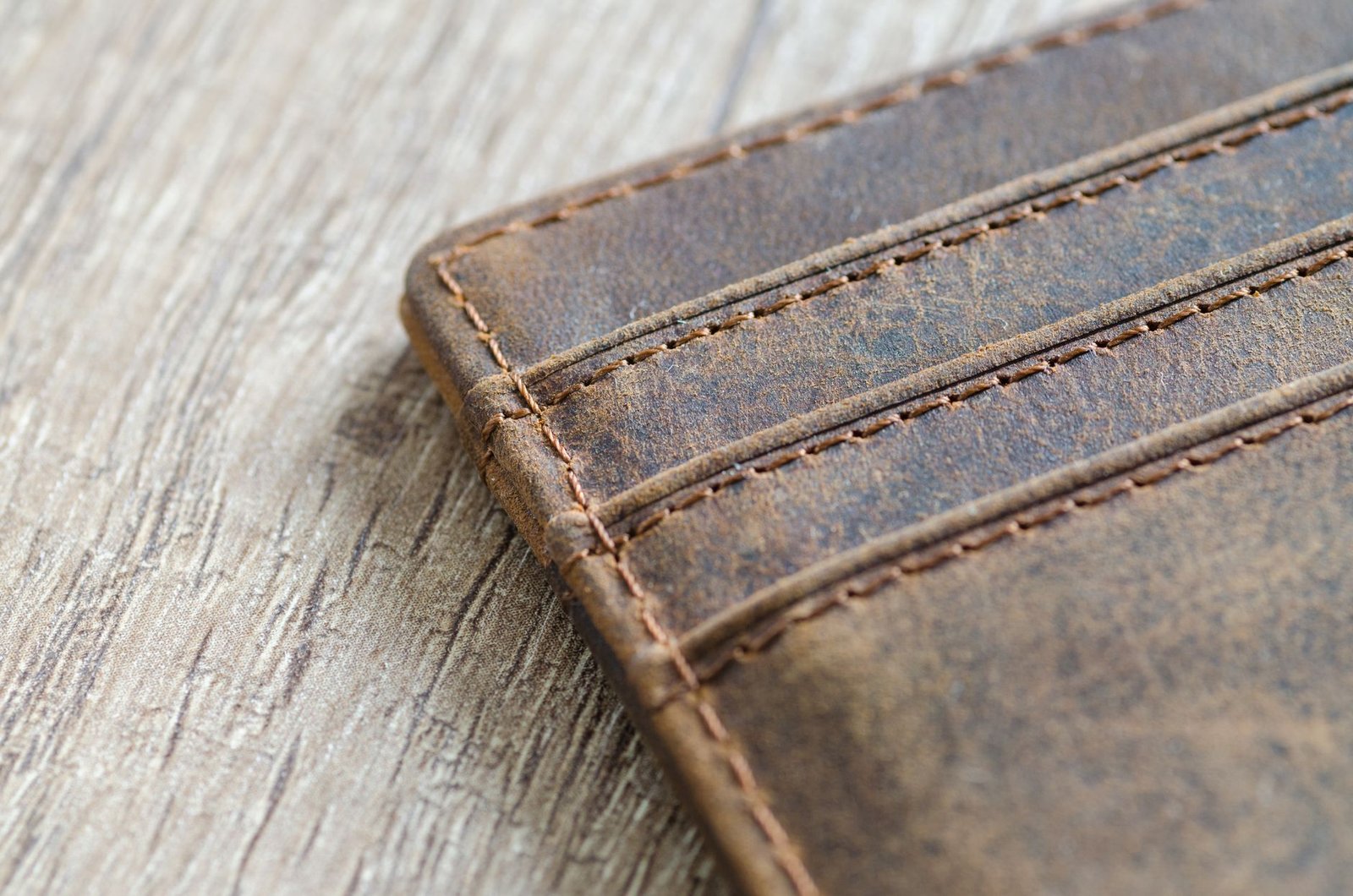
Start by looking at the surface. Full grain leather has a natural, uneven grain with visible pores and small variations. If the grain looks perfectly regular, like a repeated pattern, it has probably been embossed. Next, feel the leather. Full grain feels firm and a little textured, not plasticky or slippery. Press your thumbnail gently into a hidden spot: real full grain will show a light mark that slowly fades, while coated leather often shows nothing at all, or a mark that stays.
Real leather has a warm, rich smell, while fake or coated leather smells of chemicals or plastic. Look at the edges: full grain leather has rough, fibrous edges that show the layers of the hide, while bonded leather has smooth, uniform edges like cardboard. Finally, check the price and the seller. Genuine full grain is rarely very cheap, so a bargain price is a warning sign. Buy from sellers who name the tannery or the tanning method. You can read more about responsible leather production from the Leather Working Group and about traditional tanning from the Horween Leather Company. The Tandy Leather guide also explains the grades in plain terms.
How to Care for Full-Grain Leather
Full grain leather is tough, but a little care keeps it looking its best for decades. Keep it away from long exposure to water, and if it gets wet, let it dry naturally at room temperature, away from radiators and direct sun. Never use a hair dryer on leather, because fast heat dries it out and can crack the surface.
Clean it with a soft, dry cloth every few weeks to remove dust. For dirt, use a slightly damp cloth, then let the leather dry before you use it again. Once or twice a year, apply a thin layer of leather conditioner or balm and rub it in gently with a soft cloth. This feeds the fibres and keeps the leather supple. Use only a small amount, because too much conditioner can darken the colour or leave a sticky feel.
Store leather goods in a cool, dry place with air around them, not in sealed plastic bags, because trapped moisture can cause mould. And remember that patina is not damage: the darkening and shine are signs of good leather ageing well.

Is Full-Grain Leather Worth the Price?
For most people, yes, if you plan to keep the item for years. A full grain wallet, belt, bag, or pair of boots costs more up front, but it lasts far longer than a cheaper alternative, and it looks better as it ages instead of worse. If you replace a bonded leather wallet every year, you will spend more in five years than one good full grain wallet costs, and you will have thrown away five wallets along the way.
That said, full grain is not right for everything. If you need a perfectly uniform finish, or an item that will get soaked regularly, top grain may serve you better. Match the leather to the job, and know what you are paying for. For brand background, see our guides to Louis Vuitton, Bellroy, Goyard, and Fossil.
Frequently Asked Questions
What is full-grain leather?
Full-grain leather is the top layer of an animal hide with its natural surface left alone. It is not sanded or corrected, so the grain you see is the grain the animal grew.
Is full-grain leather the best leather?
It is the strongest grade, and it ages the best. For a perfectly uniform look, top grain may suit you better.
How is full-grain leather different from top-grain leather?
Both come from the top layer of the hide, but top grain has had its surface lightly sanded to remove flaws, while full grain is left natural. Full grain is tougher and develops a deeper patina.
Is genuine leather the same as full-grain leather?
No. Genuine leather is made from the lower layers of the hide, after the top grain is split away. It is thinner, weaker, and coated to look like better leather.
What is bonded leather?
Bonded leather is made from leather scraps ground up, mixed with glue, and pressed into sheets. It is the cheapest option, and it usually peels and cracks within a year or two.
Does full-grain leather develop a patina?
Yes. With use, sunlight, and natural oils, full-grain leather darkens and gains a soft shine. This patina is a sign of quality, and most owners value it.
How can I tell if leather is full grain?
Look for natural, uneven grain with visible pores and fibrous edges. Be wary of regular grain and very low prices.
Is full-grain leather waterproof?
No, it is not waterproof. It resists light rain well, but it will stain if soaked. Let wet leather dry naturally, and condition it to keep it protected.
How do I clean full-grain leather?
Wipe it with a soft, dry cloth, and for dirt use a slightly damp cloth and a little leather cleaner. Condition it once or twice a year to keep it supple.
Why is full-grain leather more expensive?
Only the best hides qualify, and nothing is hidden by sanding or coating. You pay for stronger material and a longer life.
What products are best made from full-grain leather?
Wallets, belts, bags, boots, and jackets benefit most, because they are used daily and age well.
#fullgrainleather #leathergrades #topgrainleather #genuineleather #leathercare #leatherbuyingguide