
What is patent leather? It is real leather that has been given a hard, glossy coating, usually layers of lacquer or polyurethane, so the surface looks almost like glass. Underneath the shine it is ordinary tanned hide, most often calfskin or cowhide, but the coating seals the pores, hides the natural grain, and gives the leather its famous mirror finish. That is why a patent leather shoe can look wet even when it is completely dry, and why a splash of water rolls straight off it.
How Patent Leather Gets Its Shine
The shine does not come from polishing the hide itself. It comes from what is put on top of it. Traditional patent leather was finished with coats of linseed oil based varnish, applied one layer at a time and left to dry, often in the sun, before the next coat went on. Each layer added depth and hardness until the surface became smooth, reflective, and largely waterproof. Modern tanneries mostly use polyurethane or acrylic coatings instead of oil varnish, because they dry faster, stay flexible for longer, and give a more consistent result.
The base leather matters too. Patent finishes need a smooth, tight grained surface, so makers usually start with corrected grain leather, where small imperfections have been sanded away, or with fine calfskin. A rough or heavily grained hide would show every bump through the glossy coating, so the surface is prepared, smoothed, and sealed before the gloss coats are applied.
A Short History of Patent Leather
Patent leather is older than most people think. One of the earliest mentions appears in a 1793 British periodical, The Bee, which described a Birmingham maker who had obtained a legal patent for a process that gave leather a glaze and polish that made it impervious to water. The name stuck because of those early patents: it was leather made by a patented process.
The story in America starts with Seth Boyden of Newark, New Jersey. In 1818 Boyden was given a piece of German made patent leather, said to be the front of a military cap, by a local carriage maker. He took it apart, studied the coating, and worked out his own way to make it, using a series of linseed oil based lacquer coats. Commercial production began on September 20, 1819, and the glossy new leather quickly became popular for formal dress. Here is the twist that surprises most people: despite the name, Boyden never patented his process. He declined to protect his inventions by law, and the name patent leather stayed anyway.
Patent leather shoes became the standard for evening wear and military dress uniforms, and they have never really left. The classic black patent Oxford is still the shoe most people picture when they think of black tie, and patent finishes still appear on dance shoes, school shoes, handbags, and belts. For more background, see patent leather history and definition.
How Patent Leather Is Made Today
Modern patent leather is made in a factory, but the idea is the same as Boyden’s: build up a hard, glossy film on the surface of tanned leather, coat by coat. According to SATRA, the footwear research body, most modern patent leather is based on cattle hide and finished with polyurethane coatings. A typical sequence runs like this.
First, the base leather is prepared. The hide is tanned and finished like any other leather, then lightly sanded and smoothed so the surface is even. Any inconsistency at this stage shows up later, magnified by the gloss.
Second, an impregnation coat is worked into the leather to seal the surface. Third, a pigmented base coat is applied, often in several passes with ironing between them, which gives the leather its colour. Fourth, an intermediate coat is sprayed on, followed by the top coat, the thickest layer and the one that creates the mirror finish. It is applied by spray or curtain coater in a sealed, dust free room, because a single speck of dust would show in the finished surface, then left to dry for hours before the leather is polished.
Cheaper patent leather is sometimes made by transfer coating: a polyurethane film is bonded onto leather splits, the thinner layers of a hide that has been split apart. It looks glossy at first, but it is less durable and more likely to peel or crack with wear. Learn more about how patent leather is made.
Types of Patent Leather
Not all patent leather is the same. Knowing which type you are looking at helps you judge quality and price.
Real patent leather is made from animal hide, usually calfskin or cowhide, with a lacquer or polyurethane coating. This is the traditional kind, and it is what most good shoemakers and bag makers use. It is firmer than uncoated leather and holds its shape well.
Faux patent leather is made from plastic, usually polyurethane or PVC on a fabric or synthetic base, with no animal hide at all. It looks very similar at first glance and costs much less, but it does not breathe and cracks or peels sooner. If a patent bag is very cheap, it is almost certainly faux. See this patent leather guide for more detail.
Patent Leather vs Other Leathers
The easiest way to understand patent leather is to compare it with the leathers you already know. The coating changes almost everything about how the leather behaves.
| Leather type | Surface | Water resistance | Breathability | Best for |
|---|---|---|---|---|
| Patent leather | Hard, mirror gloss | High | Very low | Formal shoes, evening bags |
| Full grain leather | Natural grain, matte | Moderate | High | Quality bags, boots, belts |
| Top grain leather | Smooth, lightly corrected | Moderate | Medium | Everyday shoes and bags |
| Suede | Soft, napped | Very low | High | Casual shoes, jackets |
| Genuine leather | Corrected, coated lightly | Low to moderate | Low | Budget accessories |
| Bonded leather | Reconstituted fibres | Low | Very low | Cheap belts, book covers |
The trade off is clear. Patent leather wins on shine, water resistance, and shape holding, but it loses on breathability and flexibility. Full grain leather breathes, softens, and develops a patina over years, while patent leather looks the same on day one and day one hundred, until the coating starts to show wear. For a closer look at the lower grades in this table, see our guides to what genuine leather is and what bonded leather is.
Pros and Cons of Patent Leather
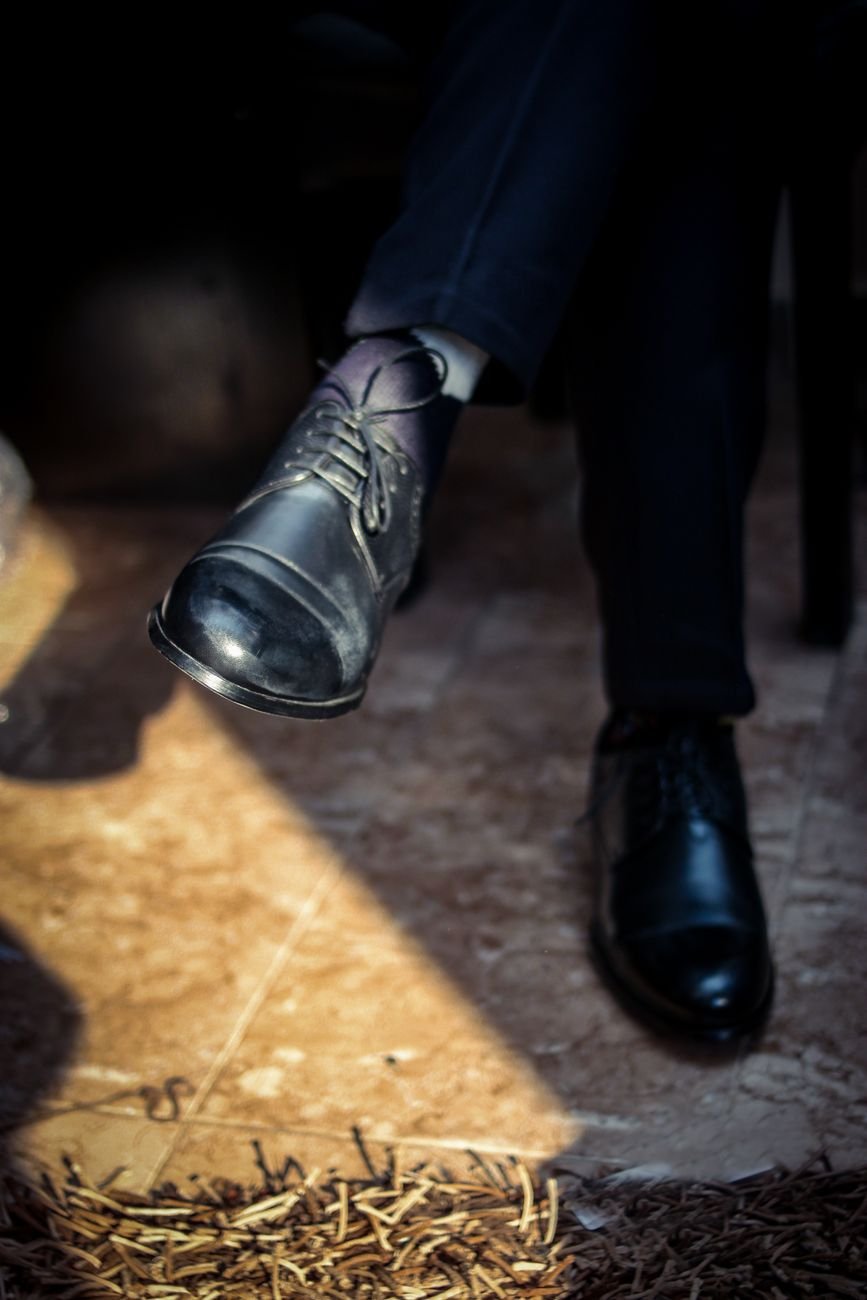
Patent leather has real strengths, and real weaknesses. Both matter when you are deciding whether to buy it.
The advantages start with the look. Nothing else gives that instant polished effect, and it makes even a simple shoe or bag look more expensive. It is also easy to clean: most marks wipe off with a damp cloth, where suede or unfinished leather would need a specialist cleaner. The coating repels water better than almost any other leather finish, so a patent bag survives rain that would stain an uncoated one. And because the leather is firm, patent shoes and bags hold their shape well.
The disadvantages are just as real. The glossy surface shows scuffs and scratches more clearly than matte leather. It does not breathe, so patent shoes can feel warm and clammy during long wear. It is stiffer than other leathers, so it does not mould to your foot, and new patent shoes often need a breaking in period. The biggest long term risk is cracking: if the coating dries out, or if the leather is bent sharply again and again, the finish can develop fine cracks that cannot be repaired. Cheap patent leather is the worst offender here, because its coating is thinner and less flexible.
Where Patent Leather Is Used
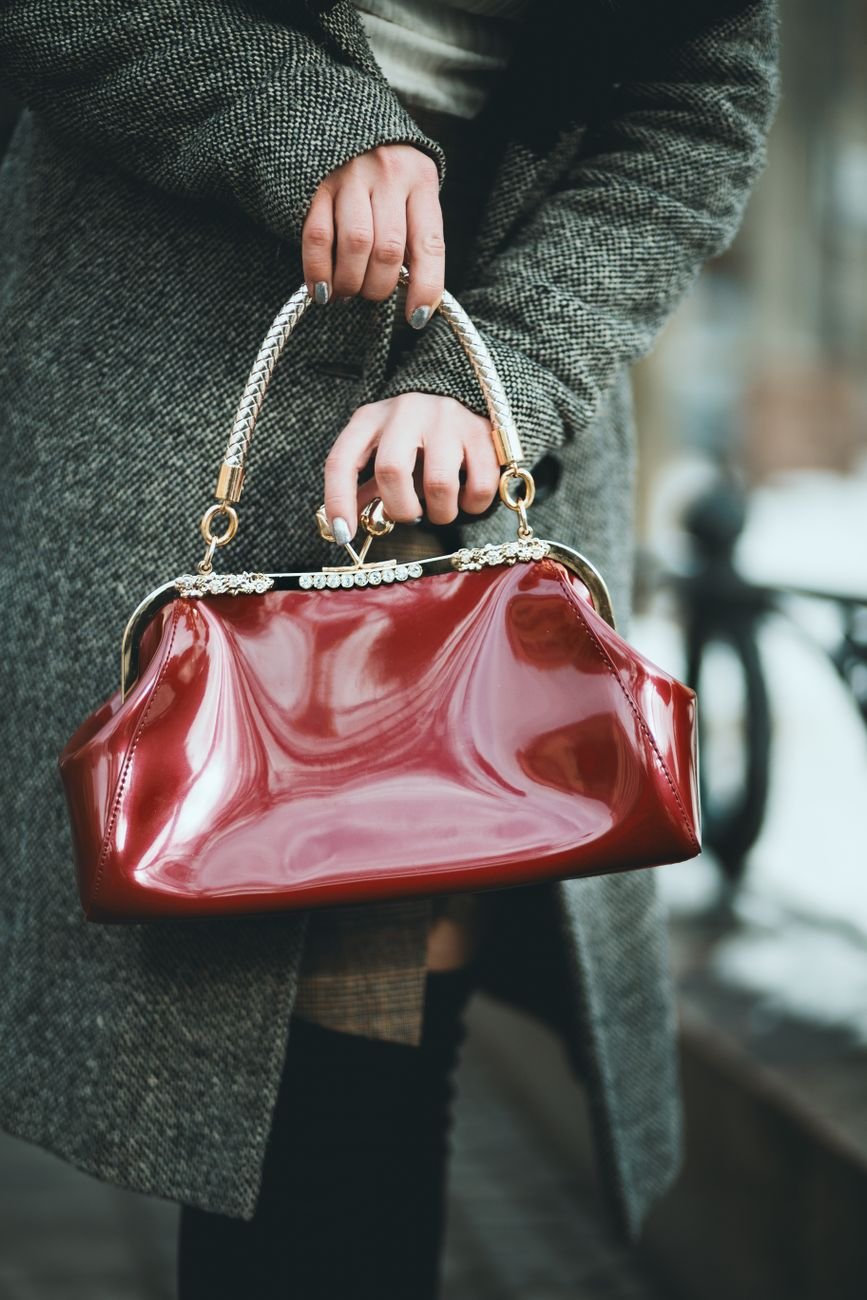
Patent leather turns up wherever a polished, formal look is wanted. The classic uses are formal shoes: black patent Oxfords and Derbies for black tie and evening wear, patent loafers for smart occasions, and patent dance shoes, where the shine is part of the performance. Military and police dress uniforms have used patent leather for belts, shoes, and peak caps for generations.
In bags, patent leather is used for evening clutches, structured handbags, and fashion totes, where the gloss is the point. It also appears on belts, wallets, watch straps, and school shoes, where the easy wipe clean surface is a practical advantage for parents.
How to Clean Patent Leather

Cleaning patent leather is simpler than cleaning most other leathers, because the coating keeps dirt on the surface. Wipe the item with a soft, slightly damp cloth to remove dust and surface dirt. For a deeper clean, use a drop of mild soap on a damp cloth, wipe gently, then wipe again with a clean damp cloth to remove any soap residue. Dry it with a soft towel and let it air dry fully. Never use a hair dryer or put patent leather near a radiator, because heat can bubble or crack the coating.
Scuffs are the most common problem. A light scuff often comes off with a soft cloth and a tiny amount of petroleum jelly or mineral oil, rubbed gently in small circles, then buffed with a clean cloth. Do not use regular leather conditioner on patent leather: it cannot soak through the coating, so it just sits on the surface and leaves a cloudy film. And do not use acetone or nail polish remover, which will dissolve the finish and leave a dull patch.
If patent leather gets wet, wipe it dry straight away and stuff shoes with newspaper or shoe trees so they keep their shape. The coating resists water, but the seams and edges are not coated, and water can get in there.
How to Care for Patent Leather So It Lasts
Patent leather needs less conditioning than other leathers, but it needs more careful storage. The coating can stick to itself and to other surfaces, and it can pick up colour from anything it touches for a long time.
Store patent items in a cool, dry place away from direct sunlight, which fades colour and dries out the coating. Keep each item in its own dust bag, and put tissue paper inside bags and shoes so they hold their shape. Never store two patent items pressed together, because the surfaces can stick and leave marks, or transfer colour from one to the other.
Avoid bending patent leather sharply. Folding a patent bag flat for storage, or cramming patent shoes into a tight space, puts a crease in the coating that can turn into a crack. Use shoe trees for patent shoes, and stuff patent bags with tissue when they are not in use. If a patent item does develop fine cracks, there is no home fix that restores the finish: a cobbler can sometimes recolour a small area, but deep cracks mean the coating has failed.
Is Patent Leather Worth Buying?
That depends on what you want the item for. For formal shoes, patent leather is still the right choice: nothing else looks as polished with a tuxedo or evening dress, and a good pair will last for years with basic care. For an evening bag or a structured handbag that you use on special occasions, patent is a good pick too, because it holds its shape and the shine does the talking.
For everyday use, think twice. A patent bag you carry daily will pick up scuffs, and a patent shoe you walk in all day will feel warmer and stiffer than a grain leather equivalent. If you love the look, go for a quality piece from a known maker, because the coating on cheap patent leather cracks and peels much sooner. When you shop, bend the leather gently: a good patent finish flexes without whitening or cracking at the bend, and check the edges and seams for peeling.
Frequently Asked Questions
What is patent leather made of?
Patent leather is real leather, usually calfskin or cowhide, that has been coated with layers of lacquer or polyurethane to give it a hard, glossy finish. Faux patent leather exists too, but that is plastic on a synthetic base, with no animal hide.
Is patent leather real leather?
Yes, traditional patent leather is real leather. The hide underneath is genuine, and only the surface is different: it is sealed with a glossy coating. Check the label if you are unsure, because many cheap patent items are faux leather made entirely from plastic.
Who invented patent leather?
The process was used in Europe in the late 1700s, and several English makers patented their own methods. In America, Seth Boyden of Newark, New Jersey developed his own linseed oil based process in 1818 and began commercial production in 1819. Ironically, Boyden never patented his process.
Is patent leather waterproof?
It is water resistant, not fully waterproof. The coating repels splashes and rain well, but water can still get in through seams, stitching, and uncoated edges. Wipe it dry after rain and let it air dry away from heat.
Does patent leather crack?
It can, especially if it is cheap, dried out, or bent sharply again and again. The coating needs to stay slightly flexible, so avoid folding patent items, keep them away from heat and sunlight, and store them stuffed with tissue so they hold their shape.
How do you clean patent leather shoes?
Wipe them with a soft, slightly damp cloth. For stubborn marks, use a drop of mild soap on a damp cloth, then wipe with clean water and dry. Remove scuffs with a tiny amount of petroleum jelly on a soft cloth, buffed gently. Do not use regular leather conditioner, which leaves a cloudy film on the coating.
Can you wear patent leather in the rain?
Yes, patent leather handles rain better than most leathers, because the coating sheds water. Wipe the item dry afterwards, and check the seams, because that is where water can seep in.
Is patent leather more expensive than regular leather?
Good quality patent leather usually costs more than plain grain leather of the same grade, because the coating process adds labour and materials. Cheap patent items are usually faux leather, which costs much less but wears out sooner.
Does patent leather scratch easily?
Yes, the glossy surface shows scratches and scuffs more clearly than matte leather. Light scuffs can often be buffed out with petroleum jelly or a patent leather cream, but deep scratches in the coating are hard to hide.
Can patent leather be repaired?
Small scuffs and colour loss can be treated with patent leather cream or by a cobbler. Cracks in the coating and peeling cannot be fixed properly at home, and a badly cracked item usually needs professional refinishing or replacement.
How should you store patent leather?
In a cool, dry place, in its own dust bag, stuffed with tissue paper so it keeps its shape. Keep patent items apart from each other and from other coloured items, because the coating can stick and transfer colour.
Is patent leather good for everyday bags?
It can work, but it is not the most practical choice for daily use. It scuffs easily, feels stiff, and needs careful storage. It suits structured bags and special occasion pieces better than a bag you throw around every day.
#PatentLeather #LeatherGuide #LeatherCare #LeatherShoes #LeatherBags #LeatherTypes