
If you have ever stood in front of a shelf full of small leather goods and wondered whether to buy a card holder or a wallet, you are not alone. The two look similar at first glance, they are both made from leather, and they both carry your cards. Yet the card holder vs wallet question has a real answer, and picking the wrong one usually means a pocket that bulges, cards you cannot reach, or cash you have nowhere to put.
The short answer is this. A card holder is a slim sleeve built for cards only, while a wallet is a larger foldable case built for cards, cash, coins and documents together. If you mostly pay by card and carry little cash, a card holder will feel lighter and neater. If you still carry banknotes, coins, receipts and an ID card every day, a wallet is the safer choice. The rest of this guide walks through the differences so you can decide with confidence.
What Is a Card Holder?
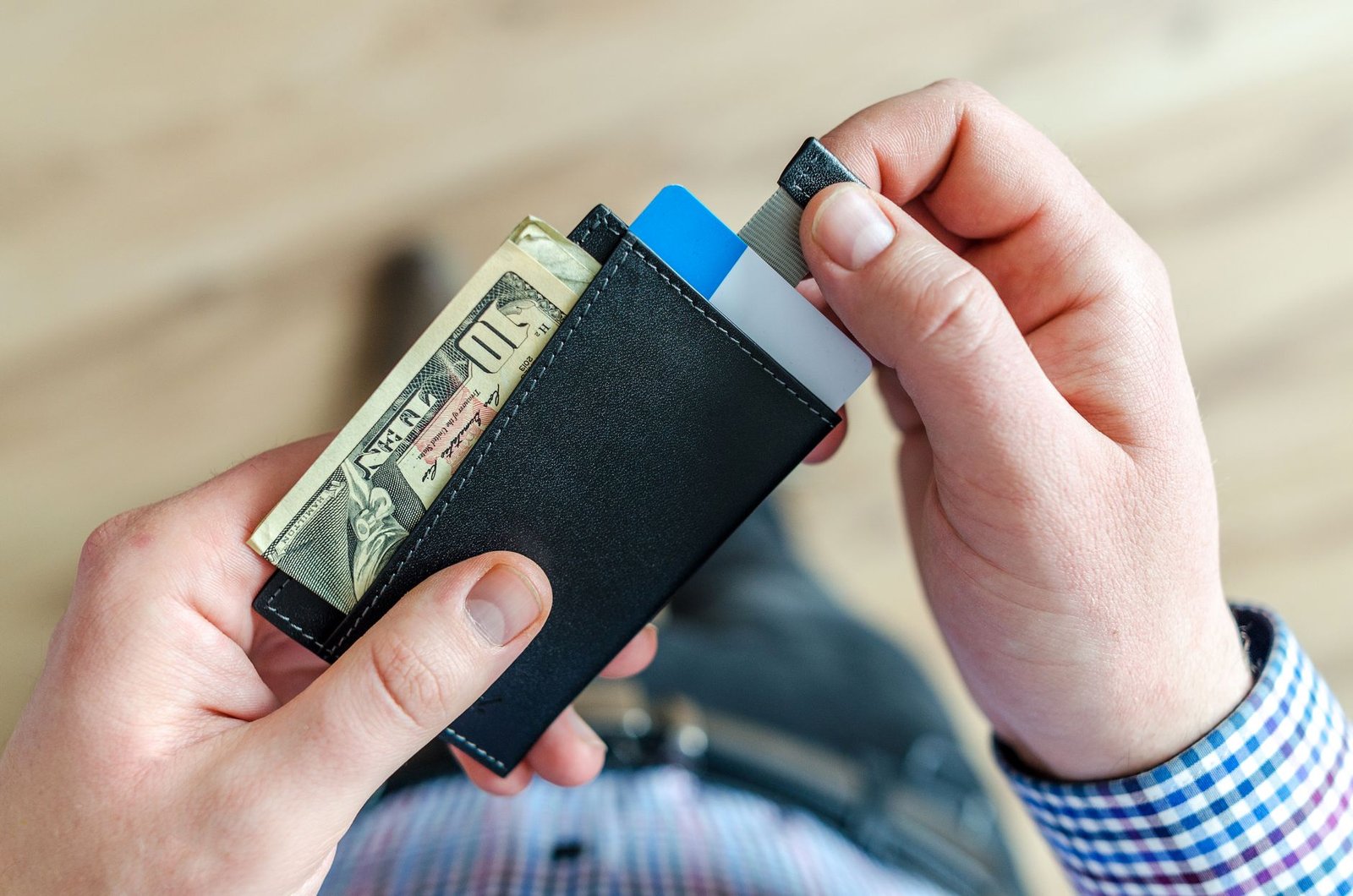
A card holder is a small, flat leather case with a few slots for payment cards, an ID card and maybe a driving licence. Most card holders hold between four and eight cards. Some have a central pocket where you can slip in two or three folded banknotes, and a few have a quick access slot on the outside for the card you use most, such as a travel card.
Card holders became popular when contactless payment took over. Once people stopped carrying thick stacks of cash, the big bifold wallet started to feel like overkill. A card holder does one job and does it well. It keeps your cards flat, organised and easy to reach, and it disappears into a front pocket or a small bag.
The best leather card holders are made from full grain or top grain leather. The leather is usually quite thin so the holder stays slim, but it still needs to be strong enough that the slots do not stretch out of shape after a few months. A good card holder feels firm when new and softens slightly with use, while the stitching around the slots stays tight.
What Is a Wallet?
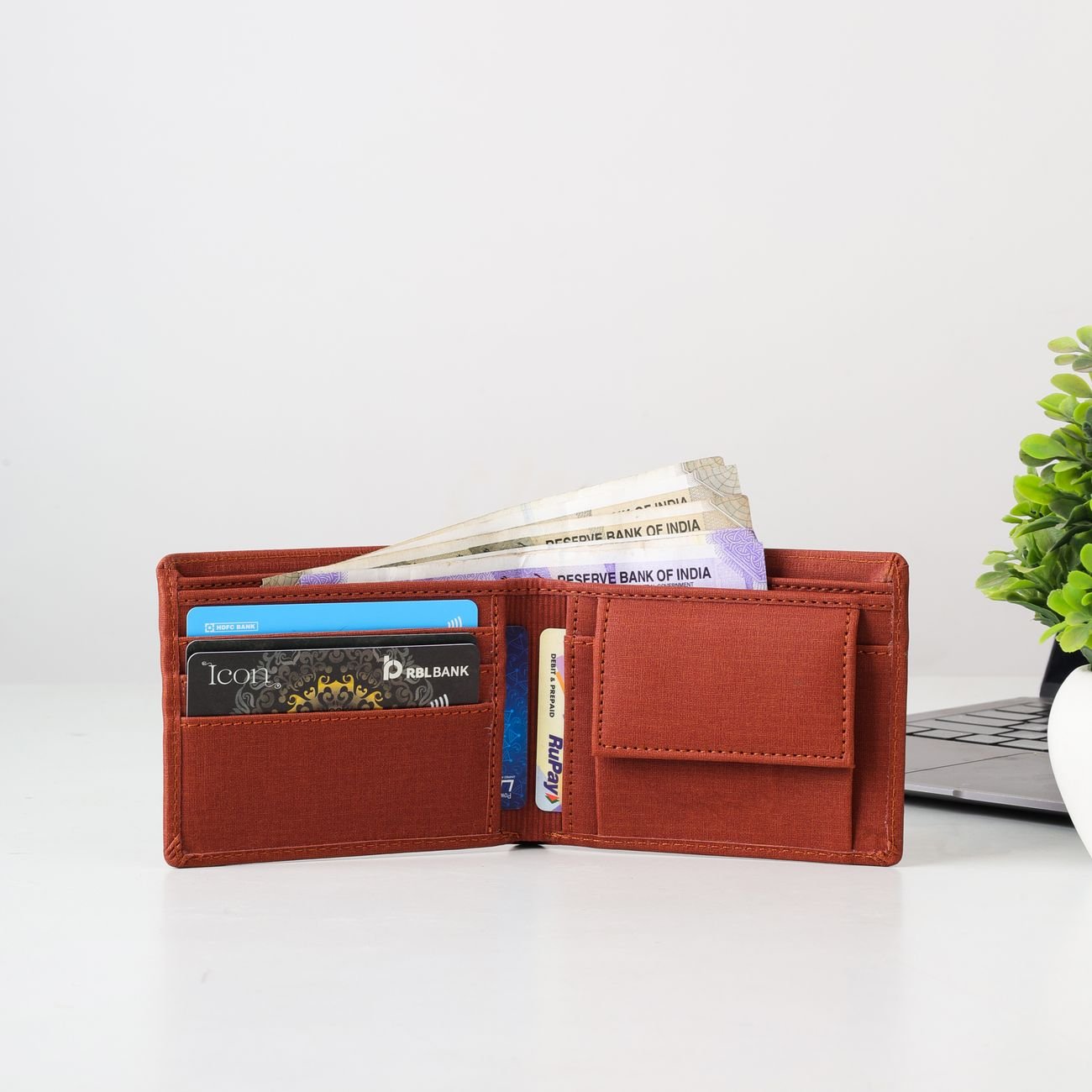
A wallet is the classic everyday carry. It folds, usually in half, and it is designed to hold everything in one place. A typical bifold wallet has six to twelve card slots, two long pockets for banknotes, and sometimes a coin pouch or a zip compartment. A trifold wallet folds twice and holds even more, though it is thicker.
Wallets suit people who still deal with cash. If you pay for parking with coins, keep receipts for work, carry a few loyalty cards and like having your ID close at hand, a wallet keeps all of that together. You open it once and everything is in front of you.
A good leather wallet is an item you can keep for years. Full grain leather wallets, in particular, develop a rich patina over time, which is the soft shine and darkening that comes from handling and age. That is one reason a quality wallet often costs more than a card holder. You are paying for more leather, more stitching and a product that is expected to last much longer.
Card Holder vs Wallet: Side by Side Comparison
| Feature | Card Holder | Wallet |
|---|---|---|
| Main purpose | Cards only | Cards, cash, coins and documents |
| Typical card capacity | 4 to 8 cards | 6 to 12 cards or more |
| Cash storage | A few folded notes at most | Full length note pockets |
| Coin storage | Almost never | Often, in a pouch or zip section |
| Size | About the size of a bank card | Larger, folds in half or thirds |
| Thickness | Very slim, around 5 to 10 mm | Thicker, around 15 to 30 mm |
| Pocket feel | Disappears in a front pocket | Noticeable bulge in a back pocket |
| Best for | Card payments and minimal carry | Cash, receipts, coins and ID |
| Typical price range | Lower, less leather and labour | Higher, more material and work |
| Lifespan | Several years with good leather | Often 5 to 10 years or more |
The table makes the trade off clear. A card holder wins on slimness and comfort, while a wallet wins on capacity and flexibility. Neither one is better in every situation, so the right choice depends on what you actually carry each day.
Size and Pocket Feel
Size is where most people feel the difference first. A card holder is barely larger than the cards inside it. It slides into a front trouser pocket, a jacket pocket or a small handbag without changing the shape of your clothes. If you wear slim trousers or a fitted jacket, that matters. A bulky wallet can pull a pocket out of shape and look untidy.
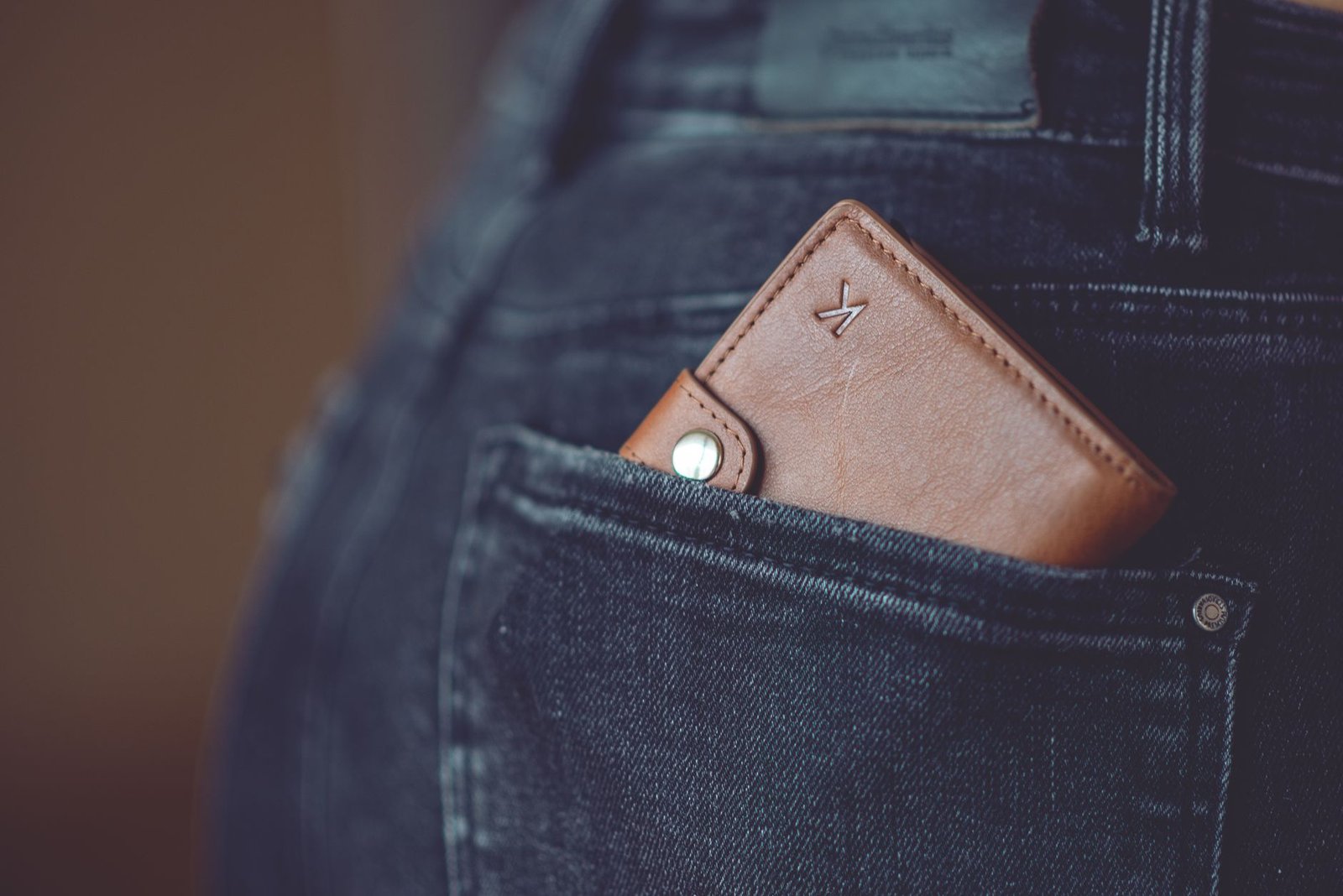
A wallet is bigger by design. A bifold wallet is roughly twice the width of a card when folded, and a trifold is thicker still. Many people carry a wallet in a back pocket, but that is not ideal. Sitting on a thick wallet every day can be uncomfortable, and it can even affect your posture over time. If you carry a wallet, a front pocket or a bag is kinder to your back.
Capacity: How Much Each One Really Holds
Capacity is the honest test. Count what you carry before you buy. Most people carry a debit card, a credit card, an ID card and a travel or work pass. That is four cards, and a card holder handles four cards easily. Add a couple of loyalty cards and a health insurance card, and you are at six or seven. A good card holder can still manage that, but the slots will be full.
A wallet handles the same cards plus more. It also takes folded banknotes without forcing you to fold them into tiny squares, and it gives coins a home instead of leaving them loose in your pocket. If you travel, a wallet can also hold a boarding pass, a hotel key card or a paper ticket.
The trap is overfilling. A card holder stuffed with ten cards will stretch, and the cards will start slipping out. A wallet stuffed with old receipts and cards you never use will become a brick. Whatever you choose, carry only what you use every week, and leave the rest at home.
Organisation, Security and Everyday Use
A card holder is fast. You pull it out, slide out the card you need, tap to pay, and put it back. There is no flap to open and no compartments to search through. For a quick coffee, a train ticket or a tap at the till, that speed is genuinely pleasant.
A wallet is more organised in a different way. It gives everything its own place. Notes go in the note pocket, coins go in the coin pouch, cards go in their slots, and receipts can be tucked behind the notes. When you need to find something, you know where to look. The trade off is that a wallet takes a second longer to open and close.
On security, both can be made with RFID blocking lining, a thin layer that stops a scanner from reading your contactless cards through the leather. Contactless theft in real life is rare and banks limit contactless payments, but the feature costs little and gives peace of mind. A slim card holder in a front pocket is also harder for a pickpocket to reach than a wallet in a back pocket. Where you carry your cards matters at least as much as what you carry them in.
Durability and Leather Quality
A card holder has less leather and fewer parts, so there is less to go wrong. The weak point is the card slots. If the leather is thin or poorly cut, the slots stretch and the cards sit loose. Look for a card holder with tight stitching, clean edges and leather that feels firm rather than floppy.
A wallet has more seams, more folds and more moving parts, so the quality of the stitching matters even more. A well made wallet will survive years of being opened and closed hundreds of times. A cheap wallet will often fail at the fold first, where the leather creases again and again.
In both cases, the leather grade decides how long the item lasts. Full grain leather is the strongest and ages the best. Top grain leather is a good middle ground, smooth and durable. Genuine leather is real leather but from lower layers of the hide, and it will not last as long. Bonded leather, which is made from leather fibres and plastic binder, is the weakest of all and is best avoided for something you use every day. To learn how long a leather wallet lasts, and what affects its lifespan, see our guide.
Price and Style
Card holders are usually cheaper, because they use less leather and less labour. A decent leather card holder from a good brand often costs between 25 and 80 dollars, while a handmade full grain card holder from a small workshop may cost 80 to 150 dollars. Very cheap card holders under 15 dollars are usually made from bonded leather or thin corrected grain, and they rarely last.
Wallets cost more. A decent leather bifold often costs between 50 and 150 dollars, and a handmade full grain wallet can cost 150 to 300 dollars or more. Luxury brand wallets can cost far more, though much of that price is the brand name rather than the leather. Think about cost per year. A 120 dollar wallet that lasts eight years costs 15 dollars a year, while a 30 dollar card holder that lasts two years costs the same per year but needs replacing sooner.
On style, a card holder looks modern and minimal, and it suits a clean, simple look. A wallet looks classic, and a well made bifold in a rich brown or black leather has a timeless feel, especially as it gains patina over the years. Neither choice says anything bad about you. The best choice is the one that matches how you dress and how you live. If you are still deciding between the two styles, our guide on types of leather wallets explained can help you compare the options.
Who Should Choose Which One?
Choose a card holder if you pay by card or phone almost everywhere, carry four to eight cards, rarely handle cash, and prefer a slim pocket. It is also a good choice if you already carry a bag and want your cards in a separate slim sleeve, or if you are buying a gift for someone who likes minimal accessories.
Choose a wallet if you still use cash regularly, carry coins, keep paper receipts, or need to carry several documents. It is also the better choice if you travel often, since a wallet can hold tickets, a boarding pass and foreign currency in one place. Parents, tradespeople and anyone who handles cash at work will usually find a wallet more useful.
You can also carry both. A card holder for daily cards in a front pocket, and a wallet kept in a bag or at home for cash and extra cards, is a flexible setup. It gives you the slim feel most days and the full capacity when you need it. Just keep them in different places, since carrying both in the same pocket defeats the purpose. For a closer look at the two main folding styles, see bifold vs trifold wallet.
Final Verdict
The card holder vs wallet debate has no single winner. A card holder is the better choice for a card first life, where slimness and speed matter most. A wallet is the better choice for a cash and document life, where capacity and organisation matter most.
Before you buy, empty your current wallet onto a table and count what is really there. If it is four to six cards and almost no cash, buy a card holder in good leather and enjoy the lighter pocket. If it is cards plus notes, coins and receipts, buy a quality wallet and keep it for years. The right answer is the one that fits your real daily carry, not the one that looks best in the shop. For help choosing, read how to choose a leather wallet.
FAQs
Is a card holder better than a wallet?
It depends on how you pay. A card holder is better if you mostly pay by card and carry little cash, because it is slimmer and lighter. A wallet is better if you carry cash, coins and receipts every day.
How many cards can a card holder hold?
Most leather card holders hold four to eight cards comfortably. Some slim designs hold only four, while larger ones with a central pocket can hold eight or more, though overfilling stretches the slots.
Can a card holder hold cash?
Yes, but only a few folded banknotes. Most card holders have a central pocket for two or three notes. If you carry cash regularly, a wallet with a proper note pocket is more practical.
Is a card holder good for everyday use?
Yes, for people who pay by card. A good leather card holder is durable, quick to use and comfortable in a front pocket. It works best when you carry only the cards you use each week.
Do card holders damage cards?
No, a well made card holder should not damage cards. The slots are designed to hold cards snugly without scratching them. Very tight slots can be stiff at first but they loosen slightly with use.
What is the difference between a card holder and a card wallet?
The terms overlap, but a card wallet is usually a slightly larger holder with room for folded cash, while a card holder is the slimmest version with slots for cards only. In practice, shops use the names interchangeably.
Should men carry a card holder or a wallet?
Either is fine. Men who wear slim trousers or carry little cash often prefer a card holder. Men who carry cash, coins and many cards often prefer a bifold wallet. It comes down to daily habits, not rules.
Can you put a driving licence in a card holder?
Yes. A driving licence is the same size as a bank card, so it fits in a normal card slot. Some card holders have a clear ID window, which makes it easy to show without removing the card.
Is RFID blocking worth it in a card holder?
It is a nice extra but not essential. Contactless card theft in real life is rare, and banks limit contactless payments. If the price is similar, choose the RFID version for peace of mind, but do not pay a large premium for it.
How long does a leather card holder last?
A good full grain leather card holder used every day can last three to five years or more. A cheap bonded leather holder may only last a year. The slots are usually the first part to wear out.
What leather is best for a card holder?
Full grain leather is the best choice because it is strong and ages well. Top grain leather is also a good option. Avoid bonded leather, which is mostly plastic and fibres, for something you use daily.
Can a card holder replace a wallet completely?
Yes, if you rarely use cash and carry few cards. If you still need coins, many receipts or paper documents, a card holder alone will feel too small and a wallet remains the better main carry.
#CardHolder #LeatherWallet #EverydayCarry #LeatherGoods #MinimalistWallet #CardHolderVsWallet