
Your wallet goes everywhere with you. It sits in your back pocket, gets squeezed into a crowded bag, and gets pulled out a dozen times a day. All that handling leaves its mark, and one day you notice it looks tired. Learning how to clean a leather wallet is simple, and a proper clean takes less than half an hour. This guide walks you through the whole process, from emptying the wallet to conditioning it afterwards.
Why Your Wallet Gets Dirty So Fast
A wallet is one of the hardest working leather items you own. It is touched constantly, and every touch transfers natural oils from your hands onto the leather. A little oil keeps leather supple, but over months the oils attract dust, and the surface turns dull or dark in patches. The edges and corners take the worst of it, because they rub against fabric every time the wallet slides in and out of a pocket.
The inside gets dirty too. Coins leave dark marks, old receipts shed paper dust, and cards leave faint scratches on the lining. Most people never clean the inside, but a quick wipe there makes the whole wallet feel new again. The kind of wallet you own changes the approach, and our guide to the different types of leather wallets explains how bifold, trifold, and card holder designs differ. Smooth leather, pebbled leather, and suede all need different care, so check what yours is made of first.
What You Need Before You Start
You do not need expensive equipment. Gather a soft lint free cloth, a second dry cloth for buffing, a small bowl of lukewarm water, a mild leather cleaner, leather conditioner made for smooth leather, a soft brush for stitching, and cotton swabs for tight corners.
Avoid anything harsh. Household cleaners, bleach, baby wipes with alcohol, vinegar, and nail polish remover can strip the colour and dry out the leather. Test any new product first on a hidden spot inside the wallet.
How to Clean a Leather Wallet Step by Step
Work slowly, use a light touch, and let the leather dry naturally between steps. Rushing is how wallets get ruined, usually by soaking the leather or scrubbing too hard.
Step 1: Empty the Wallet Completely
Take everything out: cards, cash, coins, receipts, and photos. Shake the wallet gently upside down over a bin, then run a soft brush along the seams and card slots to loosen trapped dirt.
Step 2: Wipe Away Surface Dust
Wipe the whole wallet, inside and out, with your dry cloth, using light, even strokes. Pay attention to the folds and stitching, where dust collects. You are not removing stains yet, just getting loose dirt off so it does not get rubbed deeper into the leather.
Step 3: Clean with a Damp Cloth
Dampen your cloth with lukewarm water and wring it out until it is barely moist. Wipe the wallet in small circles, one panel at a time. For most everyday dirt, water alone does a surprising amount. If the wallet still looks grimy, add a tiny amount of leather cleaner to the cloth, never directly onto the wallet, and wipe again.
Step 4: Clean the Inside and Card Slots
The inside needs a gentler touch, because the lining is often thinner than the outer leather. Wipe each card slot with the barely damp cloth, then use a cotton swab for the corners. If the lining is fabric, a dry brush is usually enough, since wetting fabric linings can leave water marks.
Step 5: Let It Dry Naturally
Leave the wallet open in a room with normal airflow, away from direct sunlight, radiators, and hair dryers. Heat dries leather too fast, and that is how cracks form. A wallet usually feels dry within an hour, but give it at least two hours before conditioning.
Step 6: Condition the Leather
Once the wallet is fully dry, apply a small amount of leather conditioner to a clean cloth and rub it in with small circles. A pea sized amount covers a whole bifold wallet. Leave it for twenty to thirty minutes, then buff gently with the dry cloth.
Wipe Gently and Never Soak the Leather
The most common mistake is using too much water or too much pressure. A gentle wipe with a barely damp cloth removes daily grime, while a soaking wet cloth and hard scrubbing push dirt into the pores and can lift the finish. If a spot does not come off after two gentle passes, treat it as a stain instead of scrubbing harder.
How to Remove Common Wallet Stains
Most wallet stains can be improved a lot with the right approach. The rule for every stain is the same: act early, test in a hidden spot, and never use a harsh chemical.
Ink Stains
Ink is the stain wallet owners fear most, usually from a pen leaking in the same pocket. Dab the spot gently with a cloth dampened with water and a little mild soap. Do not rub, because rubbing spreads ink across the leather. For dried ink, a little rubbing alcohol on a cotton swab can help, but use it sparingly and only on smooth finished leather, since alcohol can remove colour.
Water Stains
Water stains show up as dark rings or patches, often after rain. Lightly dampen the whole panel of leather, not just the stained spot, so the moisture spreads evenly, then let it dry naturally. When the panel dries as one piece, the ring often fades or disappears. Conditioning afterwards evens the colour out further.
Oil and Grease Marks
Grease from food or hand cream leaves a dark patch. Sprinkle a little cornstarch or talcum powder on the mark and leave it overnight. The powder absorbs the oil. Brush it off in the morning and repeat if needed. Do not use soap and water first, since water can set a grease stain deeper into the leather.
Scratches and Scuffs
Light scratches are part of a leather wallet’s life, and many fade on their own as the oils from your hands work into the leather. For a scratch that bothers you, rub it gently with your fingertip in small circles. The warmth and oil from your skin often blend the mark back in. Deep cuts that break the surface will not disappear, but conditioning keeps them from getting worse.
Condition Your Wallet After Cleaning
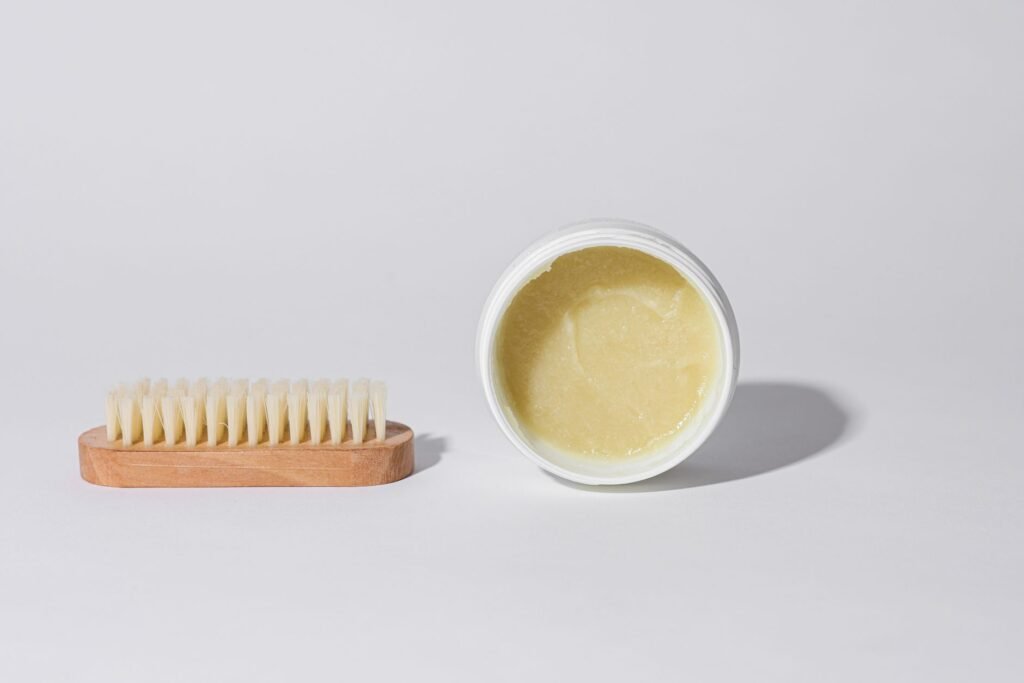
Conditioning is a basic part of leather craft, and it is the step most people skip. Cleaning removes dirt, but it also removes some of the leather’s natural oils. Without conditioner, the leather dries out, stiffens, and can crack at the fold lines, and those cracks are permanent. For a daily carry wallet, conditioning every two to three months is a good rhythm. Keep cream conditioner away from suede, which needs a suede brush and protector spray instead.
Cleaning Methods Compared
A quick wipe suits weekly care, while a deep clean is better saved for a few times a year.
| Method | Best for | How often | Watch out for |
|---|---|---|---|
| Dry cloth wipe | Dust and light surface dirt | Weekly | Use a soft cloth so you do not scratch the finish |
| Damp cloth clean | Everyday grime and dullness | Monthly | Keep the cloth barely damp, never soaking wet |
| Leather cleaner and conditioner | Deep dirt, dull colour, dry leather | Every 2 to 3 months | Test new products on a hidden spot first |
| Cornstarch on grease | Oil and grease marks | Only when needed | Leave it overnight to absorb the oil fully |
| Professional cleaning | Valuable wallets or bad stains | Rarely | Choose a leather specialist, not a general dry cleaner |
What Never to Do When Cleaning a Leather Wallet
Never put a leather wallet in a washing machine or under a running tap. Soaking leather breaks down its fibres and can warp the shape beyond repair. Never use a hair dryer, radiator, or direct sun to speed up drying. Fast heat makes leather stiff and cracked. Never use bleach, acetone, or any cleaner meant for kitchens or bathrooms. Never scrub with a stiff brush or a rough sponge, since that scratches the surface.
If your wallet is made of exotic leather, such as crocodile or ostrich, take it to a leather specialist instead. The methods here suit the smooth cowhide and calfskin most wallets are made from, the same kind of full-grain leather used in quality jackets and bags. Our guide on how to clean a leather jacket follows the same gentle principles.
How Often Should You Clean a Leather Wallet?
As a simple rule, wipe it with a dry cloth once a week, clean it with a damp cloth once a month, and do a full clean and condition every two to three months. Watch for dull leather, sticky edges, patchy colour, or a musty smell. A wallet that is cleaned regularly can last for decades.
Frequently Asked Questions
How do you clean a leather wallet without damaging it?
Empty it, brush off dust, wipe it with a barely damp soft cloth, use a little mild leather cleaner only if needed, let it dry naturally away from heat, then condition and buff gently.
Can you use soap and water on a leather wallet?
Yes, but only a tiny amount of mild soap on a damp cloth, never soap applied directly to the leather. Wipe the soap off, dry the wallet naturally, and condition it afterwards.
Can you wash a leather wallet in a washing machine?
No. A washing machine soaks the leather, breaks down its fibres, warps the shape, and can ruin the stitching and lining. Always clean a leather wallet by hand.
How do I clean the inside of my leather wallet?
Empty it, brush out dust, wipe the card slots with a barely damp cloth, and use cotton swabs for the corners. For fabric lining, use a dry brush instead.
How do I remove ink stains from a leather wallet?
Dab fresh ink gently with a cloth dampened with water and a little mild soap, without rubbing. For dried ink, a cotton swab with a tiny amount of rubbing alcohol can help. Test in a hidden spot first, then condition the area.
How do I get rid of a smell in my leather wallet?
Empty the wallet and leave it open in fresh air overnight. Place a small sachet of baking soda inside for a day, without letting the powder touch the leather. Avoid perfumes and sprays, which can stain.
Should I condition my leather wallet after cleaning?
Yes, always. Cleaning removes some of the leather’s natural oils, and conditioner replaces them. Without it, the leather dries out and can crack at the folds. Use a pea sized amount and buff off the excess.
How often should I clean my leather wallet?
Wipe it with a dry cloth weekly, clean it with a damp cloth monthly, and do a full clean and condition every two to three months. Wallets carried daily in hot climates may need conditioning a little more often.
Can I use baby wipes to clean a leather wallet?
Most baby wipes are not recommended, because many contain alcohol or chemicals that dry out leather. A soft cloth dampened with lukewarm water is safer and works just as well.
How do I clean a suede leather wallet?
Do not use water or cream conditioner on suede. Use a suede brush to lift dirt, a suede eraser for marks, and a suede protector spray afterwards. If the suede is badly stained, take it to a leather specialist.