
If you have ever run your hand across a pair of suede shoes or a suede jacket, you know the feeling straight away: soft, velvety and warm in a way that smooth leather never is. But what is suede leather exactly, and why does it need such different care from the rest of your leather goods? Suede is leather made from the underside of an animal hide, brushed to raise a fine nap, and that soft surface is both its charm and its weakness.
What Is Suede Leather
The short answer to what is suede leather is that it is leather made from the flesh side of an animal hide, the soft underside that sits against the animal, rather than the smooth grain side that faces outwards. After tanning, the flesh side is sanded and brushed until thousands of tiny fibres stand up, creating the soft, velvety surface called a nap. That nap is what makes suede feel so different from smooth leather, and it is also the reason suede behaves so differently when it gets wet or dirty.
Suede has been used for centuries, and the name comes from the French phrase gants de Suede, meaning gloves of Sweden, because Swedish gloves made from this soft leather were popular in Europe in the seventeenth century. Today it is used for shoes, boots, jackets, handbags, gloves, upholstery and even car interiors, anywhere a soft touch and a matte look matter more than water resistance.
How Suede Leather Is Made
Suede starts life the same way as any leather: an animal hide is cleaned, soaked and tanned so it will not rot. The difference comes after tanning. For smooth leather, the grain side is kept and finished. For suede, the hide is split, and the lower layer, the split, is used. That split layer has no grain surface at all, which is why suede feels the same all over.
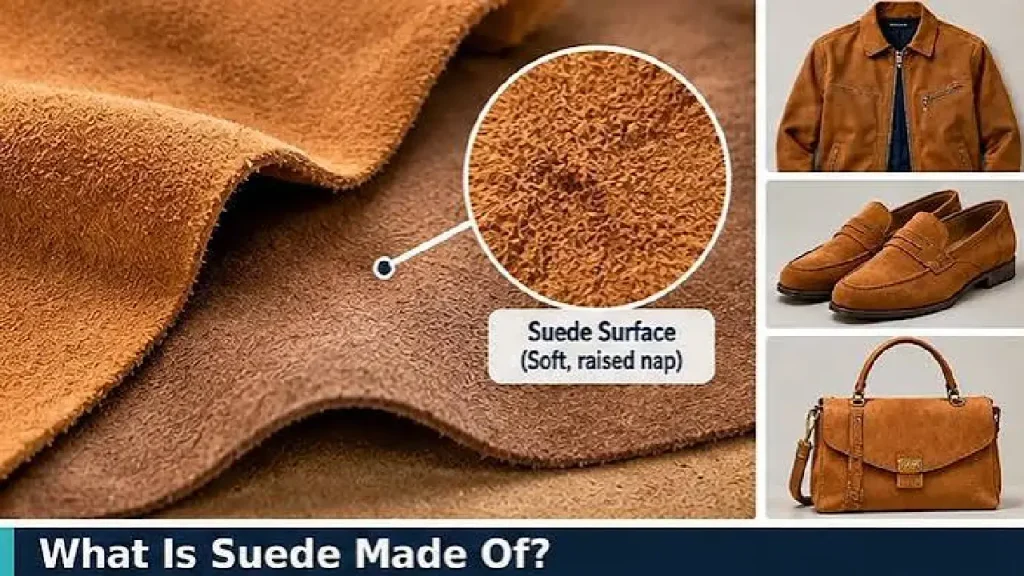
The split is then sanded with fine abrasives to raise the fibres evenly, and brushed to create the nap. The quality of the finished suede depends on how fine and even those fibres are. Good suede has a short, dense nap that changes shade slightly when you brush your hand across it, an effect people call the nap direction. The Wikipedia entry on suede gives a good overview of its history and how the nap is produced.
Suede can be made from the flesh side of a full hide too, rather than from a split, and that version is sometimes called reverse suede. It is softer and more expensive than split suede, and it is used for premium jackets and gloves. Either way, suede is real leather: it is animal hide, tanned and finished, just finished on the opposite side from smooth leather. To understand the split layer better, see our guide to what is split leather.
Suede vs Other Types of Leather
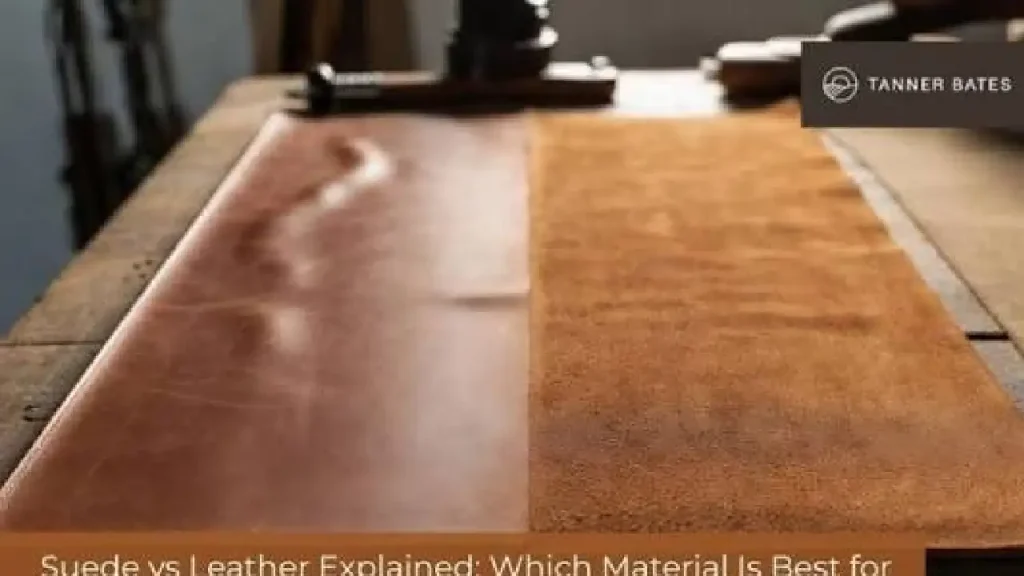
Suede is often confused with nubuck, and with smooth leather in general. The key point is that suede and nubuck look similar but are made from opposite sides of the hide, and that changes how they wear and how you care for them.
| Leather type | Made from | Surface | Water resistance | Best for |
|---|---|---|---|---|
| Suede | Flesh side or split layer | Soft, velvety nap, matte | Low, stains easily | Shoes, jackets, bags, gloves |
| Nubuck | Grain side, sanded | Very fine, short nap, soft | Low to medium | Shoes, boots, jackets |
| Full grain leather | Top grain layer, unfinished | Smooth, natural grain | Medium to good | Wallets, bags, belts, shoes |
| Top grain leather | Top layer, sanded and finished | Smooth, even finish | Medium | Bags, shoes, furniture |
| Genuine leather | Lower layers, heavily finished | Smooth, coated | Medium | Budget bags, belts, shoes |
Nubuck is the closest cousin to suede. It is made by sanding the grain side of the hide, the smooth outer side, so it keeps the strength of the grain layer while gaining a soft, velvety feel. Nubuck has a finer, shorter nap than suede, and it is usually more expensive and more durable. You can tell them apart by the nap: suede has a longer, looser nap that moves easily under your finger, while nubuck has a very fine nap that barely shifts. The Wikipedia entry on nubuck explains how it is made and why it costs more than suede.
Compared with full grain leather, suede is softer and lighter but far less tough. Full grain leather has an intact grain surface that shrugs off water and scuffs, while suede soaks up water and shows every mark. That is the trade off at the heart of suede: you give up durability and weather resistance in exchange for a softness and a look that no smooth leather can match. Read our guide to what is full grain leather to see the contrast clearly, and our guide on how to clean leather shoes for general shoe care that also applies to suede footwear.
What Is Suede Leather Used For
Suede is used wherever softness, flexibility and a matte finish matter. Shoes are the biggest use: suede loafers, desert boots, trainers and heels all rely on the way suede moulds to the foot and looks dressed up without shining.
Jackets are the second big use. A suede jacket drapes softly, feels light on the shoulders and has a warm, casual look that works with jeans and boots. Suede trucker jackets and bomber jackets have been wardrobe staples for decades. Handbags and gloves use suede for the same reason: it is soft to touch and it does not shine, so it looks understated and expensive.
Is Suede Leather Real Leather
Yes, suede is real leather. It is made from genuine animal hide, tanned the same way as any other leather, and it carries all the properties of leather: it is breathable, it ages, and it can be damaged by water and heat. The confusion comes from the fact that suede does not look like the smooth leather most people picture, so some shoppers assume it is a synthetic copy.
Fake suede does exist, usually made from microfibre or polyester, and it is sold as microsuede or faux suede. It looks similar at a glance, but it feels different: real suede has a nap that changes direction when you brush it, while fake suede has a uniform, slightly plastic feel and does not change shade under your finger.
Pros and Cons of Suede Leather
Suede has real strengths and real weaknesses, and knowing both helps you decide whether it is right for you. On the plus side, suede is beautifully soft and flexible, so shoes and jackets made from it are comfortable from the first wear, with almost no breaking in. It looks understated and expensive, with a matte finish that suits both smart and casual outfits. It is also breathable, so suede gloves and shoes stay comfortable.
On the minus side, suede stains easily. Water leaves marks, oil leaves dark spots, and salt leaves white rings. It is not waterproof, and it should not be worn in heavy rain or snow. It also wears faster than smooth leather: the nap flattens at pressure points, and the fibres can thin out on shoes and bags that get hard daily use. Finally, suede needs specific care products, because standard leather conditioner will stain it and flatten the nap.
How to Care for Suede Leather
Suede care is different from smooth leather care, and the most important rule is simple: never use standard leather conditioner or polish on suede. Conditioner soaks into the nap, darkens it permanently and flattens the fibres, so use products made for suede only.
Start by protecting new suede before you wear it. Spray it evenly with a suede protector spray, holding the can about fifteen centimetres away, and let it dry completely for at least a few hours. Repeat the spray every few months, or after the item has been out in damp weather. A good protector does not make suede waterproof, but it gives water and stains time to bead up so you can blot them off before they soak in.
Brush suede regularly with a suede brush, which has stiff brass or nylon bristles. Brush in one direction to lift the nap and remove dust, and brush against the nap to revive flattened areas. For small marks, use a suede eraser, a small rubber block that lifts dry stains from the nap.
For a deeper clean, use a suede cleaner or a small amount of white vinegar on a cloth for stubborn marks, and always test on a hidden spot first. If the suede gets soaked, stuff shoes with newspaper to hold their shape and let them dry slowly at room temperature. Never use a hair dryer or a radiator on suede, because fast heat hardens the fibres and leaves the nap stiff and patchy.
Can Suede Leather Get Wet
Suede can get wet, but it does not like it. Water soaks into the open fibres of the nap and can leave dark marks and stiff patches once it dries. A light drizzle on protected suede is usually fine if you blot it dry and brush the nap once it is dry, but heavy rain can leave permanent water stains, especially on light coloured suede.
FAQs
What is suede leather?
Suede is leather made from the flesh side or split layer of an animal hide, sanded and brushed to raise a soft, velvety nap. It is real leather, just finished on the opposite side from smooth leather.
Is suede real leather?
Yes. Suede is genuine animal hide, tanned like any other leather. Fake suede made from microfibre or polyester is also sold, but it feels plasticky and does not change shade when you brush it.
What is the difference between suede and nubuck?
Suede is made from the flesh side of the hide and has a longer, looser nap. Nubuck is made by sanding the grain side, so it has a finer, shorter nap and is usually more durable and more expensive.
Can suede leather get wet?
It can, but water stains suede easily. Light rain on protected suede is usually fine if you blot it dry, but heavy rain can leave permanent marks, especially on light colours.
How do you clean suede leather?
Brush it with a suede brush, use a suede eraser for dry marks, and blot wet stains gently without rubbing. Never use standard leather conditioner, polish or soap on suede.
Can you condition suede leather?
No, not with normal leather conditioner, which stains suede and flattens the nap. Use a suede protector spray instead, applied before the first wear and repeated every few months.
What animals is suede made from?
Most suede comes from lamb, goat, calf or deer hides. Lambskin suede is the softest, goat suede is tougher and flexible, and calf suede is firmer and good for shoes.
Is suede leather durable?
Suede is less durable than smooth leather. It wears faster at pressure points and stains easily, but with protection and regular brushing it can last for years of fair weather use.
Why does suede change colour when you touch it?
That is the nap direction. Brushing the tiny fibres one way makes them catch the light differently than brushing them the other way, so the shade shifts as your hand moves across the surface.
Can you wear suede shoes in the rain?
It is best not to. Save suede shoes for dry days and wear smooth leather shoes in wet weather. If you do get caught in rain, blot them dry and brush the nap once they are fully dry.
How do you remove stains from suede?
Use a suede eraser for dry marks and a suede brush to lift the nap. For stubborn marks, a small amount of white vinegar on a cloth can help, but always test on a hidden spot first.
Does suede leather fade in the sun?
Yes, sunlight fades suede over time, especially darker colours. Store suede away from direct sunlight and do not leave suede jackets or bags in a sunny window.
Is suede more expensive than leather?
Good quality suede costs about the same as good smooth leather. Very cheap suede is usually low grade split suede and will not last.
Can suede be waterproofed?
Suede cannot be made fully waterproof, but a suede protector spray gives it good water resistance. Reapply the spray every few months for the best protection.
#suedeleather #whatissuede #suedevsnubuck #suedecare #suedeshoes #leatherguide